


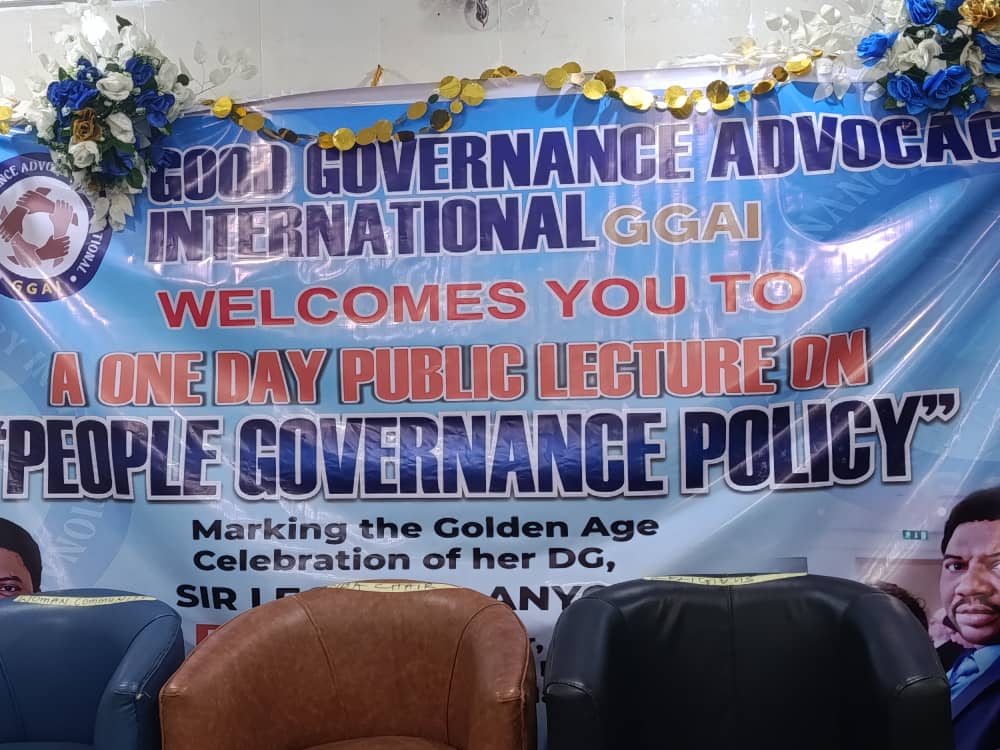
CALABAR – Governance and Advocacy International (GGAI) has called for a shift from politics-focused discourse to governance-centred action, urging policymakers across Nigeria to formulate policies that reflect the genuine needs and aspirations of the people NEGROIDHAVEN has garnered.
Speaking during a one-day public lecture on “People Governance Policy” held on Tuesday in Calabar to mark his 50th birthday, the Director General of GGAI, Leonard Anyogo Esq, said the time had come for the country to prioritize governance over political maneuvering.
According to Anyogo, politics should serve merely as a vehicle, while good governance must be the destination.
“In Nigeria, we spend so much time planning for elections, not for the people. Politics is the vehicle, but the destination must be good governance,” he said.
“Policies of government should be drawn from the people, not imposed on them. That’s the only way citizens can own the process and bridge the disconnect between the government and the governed.”
Anyogo, who described GGAI as “Nigeria’s own version of Chatham House”, explained that the organisation was founded to promote policy dialogues and research-driven governance reforms. He said GGAI’s work aims to strengthen ethics, participatory leadership, and public accountability in both state and national policy design.
Also speaking at the event, the Vice Chairman of the Cross River State Planning Commission, Mr. Bong Duke, commended GGAI for institutionalizing people-centred advocacy in governance conversations.
He said Cross River State under Governor Bassey Otu has already adopted a “people-first” approach to planning and implementation.
“We don’t measure governance by how many roads are built, but by how many lives are improved,” Duke said.
“Each policy or project must have a direct impact on citizens — that’s the new model of governance we’re pursuing in Cross River.”
The lecture, attended by policymakers, academics, civil society leaders, and students, featured discussions on participatory governance, ethics in public service, and community feedback mechanisms.
Anyogo further urged governments at all levels to institutionalize engagement platforms where citizens can influence policy direction.
“Governance is not just for those in office; it’s a collective process,” he said. “Communities must be involved from planning to execution.”
The event was part of activities marking Anyogo’s golden jubilee celebration and reaffirmed GGAI’s commitment to deepening policy conversations that advance transparency, accountability, and citizen inclusion in Nigeria’s governance system.