


…Faced with the common threat of abandoned initiatives, leaders at the ILI Fellowship close-out in Ughelli are building a practical model for long-term impact, drawing from a hard-won case study in Bayelsa.
UGHELLI, Delta state – In community development across the Niger Delta, the most formidable challenge often begins when the initial funding ends. At the heart of the Intersectional Leadership Incubator (ILI) Fellowship’s second day in Ughelli, this critical question took center stage: how can grassroots projects survive and thrive beyond their seed grant?
The answer emerged not as a theoretical model, but as a practical blueprint, forged from the real-world struggles and successes of a women-led environmental project in Oruma Creek, Bayelsa State, and refined through the collective intelligence of the fellowship’s fellows.
The day’s “Learning Lab,” facilitated by Mr. Monday Osasah, Executive Director of the African Centre for Leadership, Strategy & Development (Centre LSD), presented a compelling case study: the “Women-Led Oil Spill Monitoring & Environmental Restoration Project.” While the project successfully trained 25 women monitors and documented six spill sites, it soon faced the classic sustainability trilemma—dwindling funds, community resistance, and bureaucratic delays.
“The seed grant was insufficient to sustain continuous monitoring,” the case study noted, highlighting how concentrated leadership and weak government follow-up threatened to undo early gains.
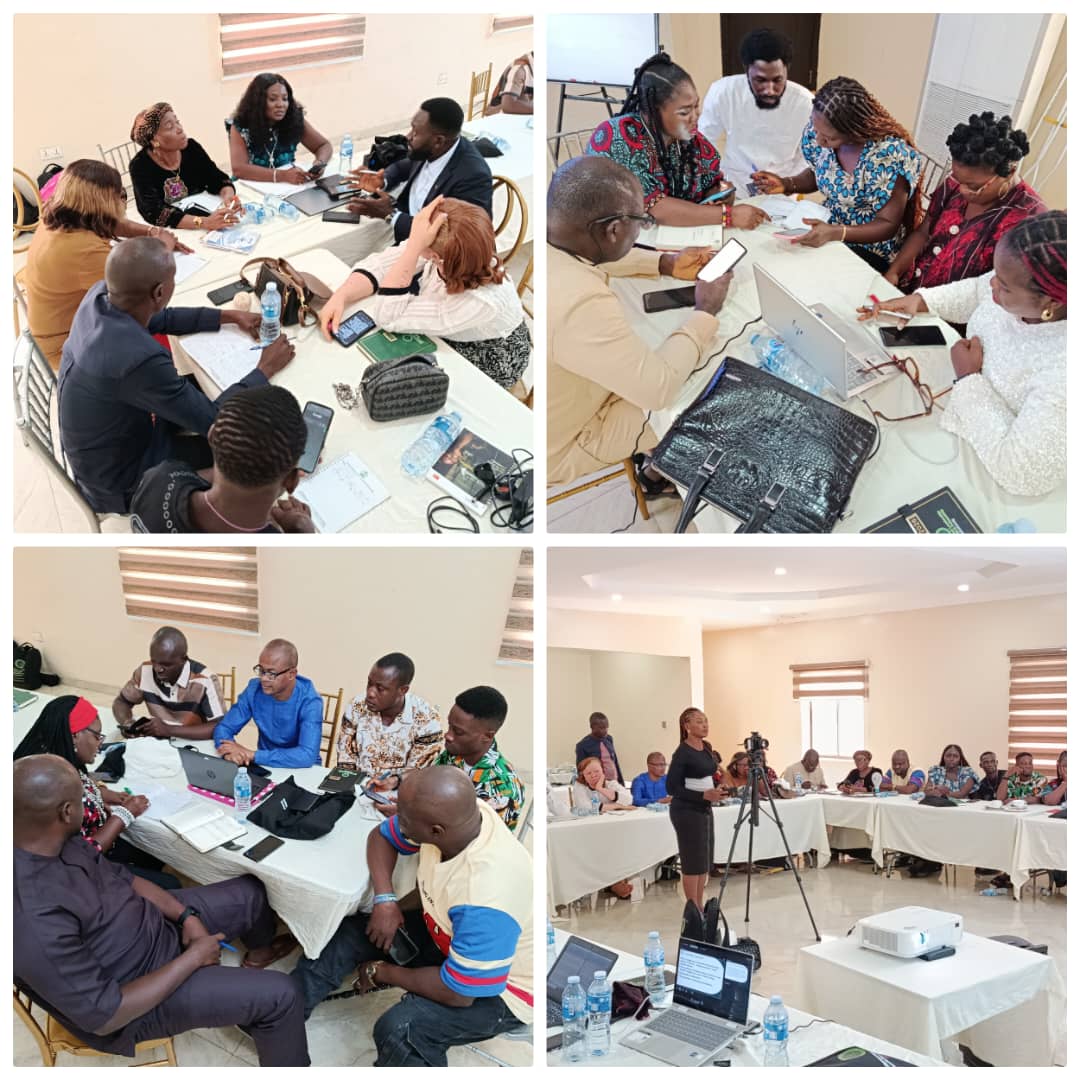
This case served as a springboard for a intensive group work session, where fellows were tasked with devising their own sustainability plans. The responses from Groups 1, 2, and 3 revealed a powerful consensus, crystallizing into a multi-pronged blueprint for action.
The Four Pillars of the Sustainability Blueprint
Strategic Institutional Partnerships: Moving beyond operating in isolation, the groups unanimously prioritized embedding their projects within existing structures. Proposals included formal collaboration with state ministries, partnerships with national and international NGOs for technical and legal support, and the formation of inclusive community committees to ensure local ownership. This directly addressed the isolation faced by the Oruma Creek project.
Diversified and Innovative Funding: The groups looked beyond traditional grants to more resilient financial models. Ideas ranged from setting up social enterprises—such as selling products from project activities—to forming internal cooperatives for member contributions and launching targeted media campaigns to attract diaspora funding and corporate social responsibility (CSR) opportunities.
Community Ownership and Structure: A key lesson from the case study was the danger of relying on a single leader. The fellows’ plans emphasized decentralizing power by establishing management teams, forming cooperatives that include all stakeholders (women, youth, traditional leaders), and continuous training to build a broad base of capable leaders within the community.
Strategic Communication for Visibility and Accountability: The groups identified the media as a crucial ally for sustainability. Plans included creating dedicated social media handles to build an audience, partnering with radio stations for public awareness campaigns, and using media visibility to hold powerful actors and government agencies accountable, thereby reducing the risk of intimidation.
In his presentation, Mr. Osasah underscored the critical need for this strategic shift. The session moved the fellows from being project implementers to architects of sustainable community institutions.
The outcome of this intensive day is more than an academic exercise. As the ILI fellows prepare to return to their respective communities across the ten Niger Delta states, they carry with them a tested playbook. It is a blueprint that transforms a short-term grant into a long-term vision, offering a tangible pathway to ensure that the seeds of change planted today continue to grow long after the initial support has ended.


