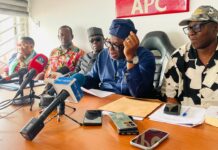



Calabar — Gender and Development Action (GADA) has briefed journalists in Calabar on the provisions of the proposed Special Seats Bill for Women, outlining plans for 74 reserved seats at the National Assembly (NASS) and 180 seats across State Houses of Assembly as part of a nationwide strategy to improve female political representation NEGROIDHAVEN can report.
Speaking during a media roundtable organised by GADA in partnership with UN Women and Canada Aid, Programme Manager Nnenna Ugbor explained that the Special Seats Bill is designed to address Nigeria’s longstanding gender imbalance in governance by guaranteeing at least one female representative per state at both chambers of the National Assembly.
Under the proposal:
– Each of the 36 states and the FCT will produce one woman senator, totalling 37 seats.
– Each state and the FCT will also produce one woman member of the House of Representatives, bringing the number to another 37 seats.
This amounts to 74 special seats at the federal level.
At the state level, the bill provides for three reserved seats for women in each State House of Assembly, corresponding to the three senatorial districts in each state. This totals 180 seats nationwide.
Ugbor said the design is intended to boost women’s representation from the current 4 percent to a more inclusive and equitable level.
“In Cross River today, only one woman sits in the House of Assembly,”she noted.
“This bill will ensure balanced representation, not just for women, but for democracy.
She added that the reserved seats are part of a temporary 16-year corrective framework, intended to enable women, including young women and women with disabilities, to gain a foothold in political decision-making spaces.
Gender advocate and event facilitator, Dr. MacFarlane Ejah, reinforced the need for deliberate mechanisms to improve women’s representation, citing examples of countries like Rwanda that have achieved over 60 percent female parliamentary participation through similar approaches.
“Nigeria ranks 181 globally in women’s representation. Without deliberate action, the numbers will not improve,” Ejah said.
“The Special Seats Bill offers a practical path toward reversing decades of exclusion.”
The media roundtable forms part of ongoing advocacy efforts ahead of the National Assembly’s scheduled vote on the bill on December 9 and 10. GADA urged journalists to sustain high-quality, factual reporting to keep the issue in public focus and pressure lawmakers to act.