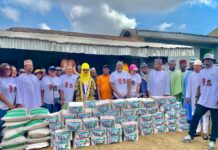


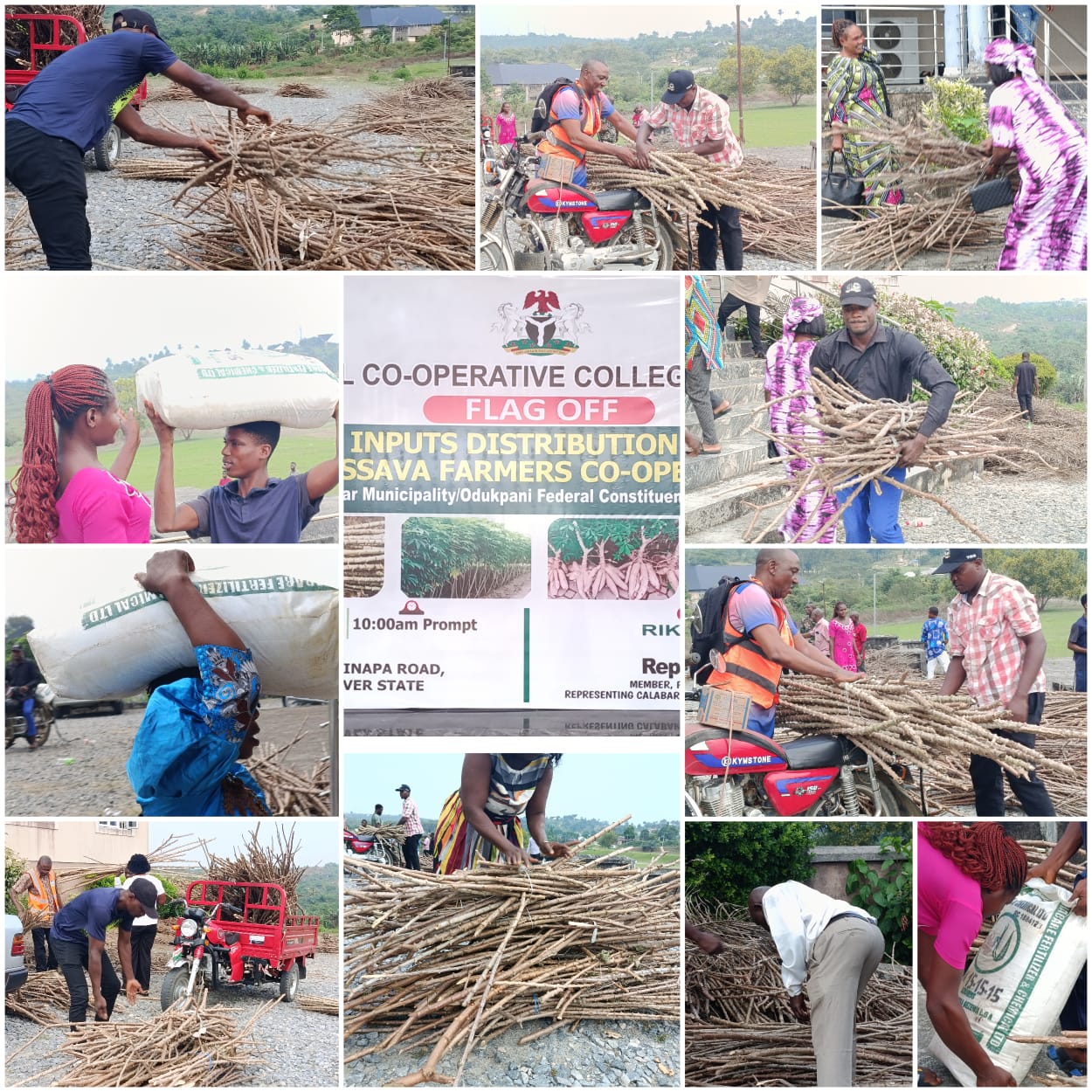
Farmers and cooperative members from Calabar Municipality/Odukpani Local Government Area have expressed appreciation to their representative at the House of Representatives, Bassey Akiba, following the distribution of improved variety of cassava cuttings and fertiliser to cooperative farmers under his livelihood empowerment programme.
One of the beneficiaries, Cynthia Ekanem Bassey, described the intervention as timely and impactful, noting that it would improve food production and household stability. She said the programme would ensure that farmers “will not be wanting” and would have “enough food,” adding that the initiative was a reflection of Akiba’s commitment to keeping promises made to his constituents.
According to her, the programme represents “an unprecedented favour” to the people of Odukpani and Calabar Municipality, particularly those engaged in farming and other livelihood activities.
Another beneficiary, Oku Ekpenyong Oku, President of Unit 5, Ward 1, Creek Town 1 Cooperative, described the intervention as a fulfilment of the lawmaker’s earlier pledge to cooperative members. He recalled that Akiba had assured them of sustained engagement and support when the cooperative was first established.
“He said he was not going to leave us. He formed a cooperative and promised to ensure its mobility, and he has been giving us step by step,” Oku said.
He added that cooperative members had received training in cassava production, fisheries and oil palm cultivation prior to the distribution of inputs. “Today he is supporting us with cassava stems and fertiliser. He has done very well, and we hope he goes back for a second term,” he said.
Similarly, Comr. Amo Ekpata, President of Unit 35, Ward 8, Calabar Municipal Cooperative Society, said the empowerment programme demonstrated what he described as the “dividends of democracy.” He explained that the cassava intervention was part of a broader empowerment drive that targets farmers already engaged in production.
Ekpata disclosed that about 500 beneficiaries in the cassava cluster were selected for the scheme and were empowered with improved cassava cuttings sourced from Oji River, alongside a 50kg bag of fertiliser. He noted that the lawmaker had also promised continued support, including financial empowerment, as the programme progresses.
“This will go a long way in helping our people become self-reliant and improve the food value chain in our society,” he said.
Chairman of the Bassey Akiba Cooperative Foundation Movement, Prof. Charles Bassey O’Neill, described the programme as well-designed and integrated, expressing optimism that it would yield long-term benefits for agricultural development in Cross River State.
He said the initiative was expected to have a “multiplying effect” on agricultural processes in the state if beneficiaries properly utilised the inputs provided.
Another beneficiary, Edem Etim Okon, from Odukpani Local Government Area, said the programme marked the first time he had directly benefited from governance. “People have been ruling and governing, but I have never benefited from their governance before,” he said.
Okon described the intervention as a source of joy, noting that many farmers had the capacity to farm but lacked resources. He thanked Hon. Akiba for assisting farmers with the necessary materials and prayed for continued wisdom and strength for the lawmaker to do more for youths and future generations.
Addressing beneficiaries and journalists at the event, Hon. Bassey Akiba, Member representing Calabar Municipality/Odukpani Federal Constituency at the National Assembly, said the distribution was part of a continuing input support programme for cooperative farmers.
He explained that the intervention followed a similar distribution of oil palm seedlings to cooperative farmers a day earlier, stressing that the programme was designed to support existing livelihoods rather than create new ones.
“We are not giving you a livelihood; we are supporting your livelihood,” Akiba said, adding that the beneficiaries were already engaged in farming activities.
According to him, each of the 500 cassava farmers would receive ten bundles of cassava cuttings and a bag of NPK fertiliser to help boost yield. He also disclosed that 100 farmers had earlier received oil palm seedlings, with enough seedlings provided to cultivate at least one hectare per farmer.
On sustainability, the lawmaker said the cooperative model was deliberately adopted to ensure continuity beyond one-off empowerment programmes. He noted that cooperative farmers would continue to receive follow-up support, including farm visits and additional interventions where necessary.
Akiba further highlighted health, education and livelihood as the three focal areas of his constituency interventions. He revealed that cooperative members were being enrolled in a health insurance scheme that would allow them access to medical care, with a target of covering up to 10,000 constituents.
He said the initiative was aimed at ensuring that beneficiaries remained healthy enough to sustain their livelihoods and contribute meaningfully to their communities.