


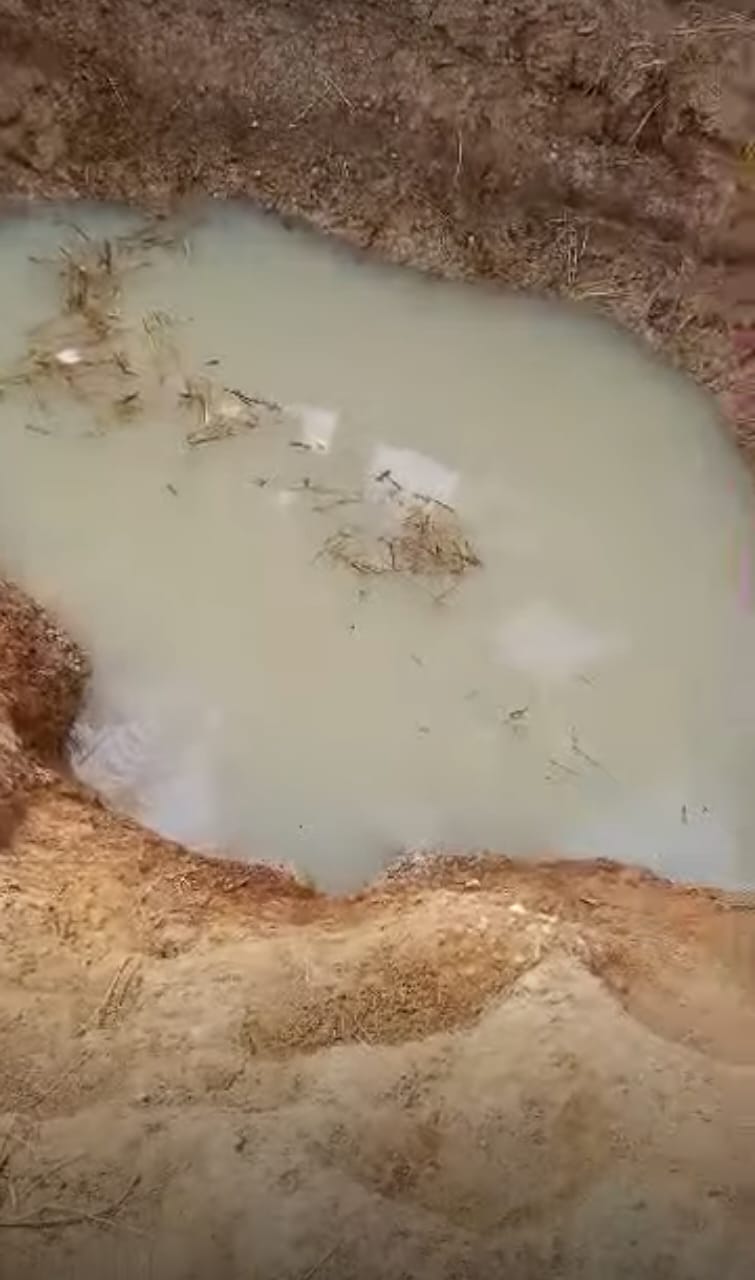
Residents of Igol-Ukpagada community in Ogoja Local Government Area of Cross River state have raised the alarm over their continued dependence on a muddy stream as their only source of drinking water NEGROIDHAVEN can report authoritatively.
The community, said to have a population of over 600 people, lamented that the stream remains their sole water supply despite its visibly unsafe condition.
A community elder, Mr Peter, who spoke during a visit by concerned stakeholders to the area, confirmed that there was no alternative source of potable water for residents.
“This is the only source of water here in this community,” he said. “We are more than 600 people living in Igol-Ukpagada and we don’t have any other water apart from this.”
Findings revealed that residents, including women and children, fetch water daily from the stream for drinking, cooking and other domestic use.
A visitor to the community, Prince Philip Alaga, who said he went to verify reports circulating online, described the situation as disturbing after inspecting the water source and visiting homes in the area.
“I visited at least three compounds and I was deeply shocked by the kind of water our people are forced to consume daily,” he said. “No community deserves to live under such conditions, especially when access to clean and safe drinking water is a basic necessity of life.”
According to residents, a manual borehole was installed in the community during the administration of former Cross River State governor, Donald Duke, but it has since become non-functional.
They alleged that the facility had been working intermittently before eventually breaking down completely, leaving the community with no reliable water source.
Community members said repeated appeals for intervention had yet to yield results, forcing them to rely on the untreated stream water despite concerns about possible health implications.
Public health experts have consistently warned that consumption of untreated surface water increases the risk of waterborne diseases such as cholera, dysentery and typhoid fever, particularly in rural settlements with limited healthcare access.
Residents who spoke on condition of anonymity expressed fear that children and elderly persons in the community were most vulnerable.
“We don’t have a choice,” one resident said. “If we don’t fetch from here, there is no other place to get water.”
Alaga called for urgent intervention from relevant authorities and well-meaning individuals, stressing that the situation required immediate attention.
“The people of Igol-Ukpagada deserve urgent intervention and this matter should not be treated lightly,” he said.
There are ongoing efforts to obtain official reaction from the Ogoja Local Government authorities as of the time of filing this report.
Residents appealed to the Cross River State Government, development agencies and humanitarian organisations to provide a functional borehole or other sustainable water solution to the community.
They warned that continued neglect could expose them to avoidable health crises and further hardship.
As of press time, the muddy stream remained the only visible water source serving the entire Igol-Ukpagada community.


