

Supporters of the social media plea argued that influencers like VeryDarkMan have the reach to amplify neglected rural voices, while critics maintained that local government structures, including the Obubra LGA chairman’s office, should be the first port of call for community service delivery failures.
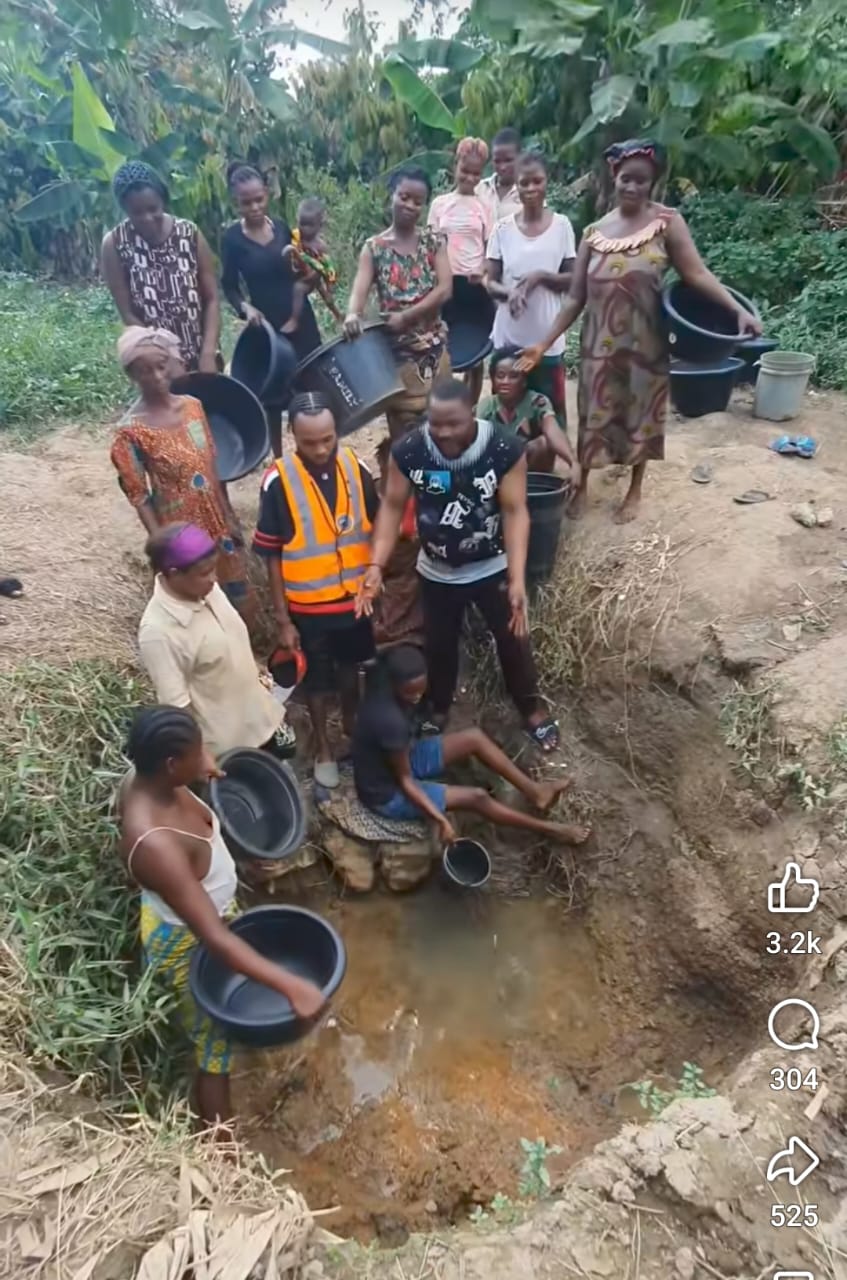
Residents of Owakande community in Obubra LGA of Cross River state have taken to social media to appeal for help over lack of potable water, prompting mixed reactions from online users and raising broader questions about rural water delivery in the region NEGROIDHAVEN has garnered.
In a now-circulating video, community members called on Nigerian social media influencer and activist VeryDarkMan — known by his followers as “VDM” and leader of the Ratel Movement” — to draw attention to the hardship caused by the absence of clean water in Owakande, leading them to use potentially unsafe sources for drinking, cooking and bathing.
VeryDarkMan, whose real name is Martins Vincent Otse and who has millions of followers across social platforms, has mobilised his supporters under the Ratel Movement banner for community service and advocacy initiatives in Nigeria.
While the online appeal has gained views and sympathy, some social media commenters questioned the residents’ decision to seek the intervention of an influencer rather than respective local government authorities.
“Is VeryDarkMan your local government chairman? Call for your local government chairman and not VeryDarkMan,” one commenter argued, highlighting a recurring debate over the role of influencers versus elected officials in addressing public service failures.
Obubra water projects underway amid ongoing rural challenges
The online appeal coincides with ongoing water, sanitation and hygiene (WASH) interventions by government and development partners in Obubra LGA, underscoring both the scale of rural water issues and efforts to address them.
In 2025, the Cross River State Government launched the WASH Systems for Health programme (WS4H), backed by a ₦95 million counterpart fund approved by Governor Bassey Edet Otu, aimed at enhancing access to safe water and improved sanitation across Obubra communities.
The programme, implemented through the state Ministry of Water Resources, the Rural Water Supply and Sanitation Agency (RUWATSSA) and development partners, seeks to strengthen local water systems, promote hygiene, and reduce water-borne diseases by building reliable and sustainable infrastructure.
Authorities also inaugurated the Obubra Local Government Area Task Group on WASH, involving government officials, traditional leaders and development actors, to improve service delivery and community engagement at the grassroots level.
Despite these interventions, water access remains inconsistent in some rural settlements, where streams, hand-dug wells or unprotected sources are often the only available options — a situation that health experts warn can elevate risks of waterborne diseases and poor sanitation outcomes.