


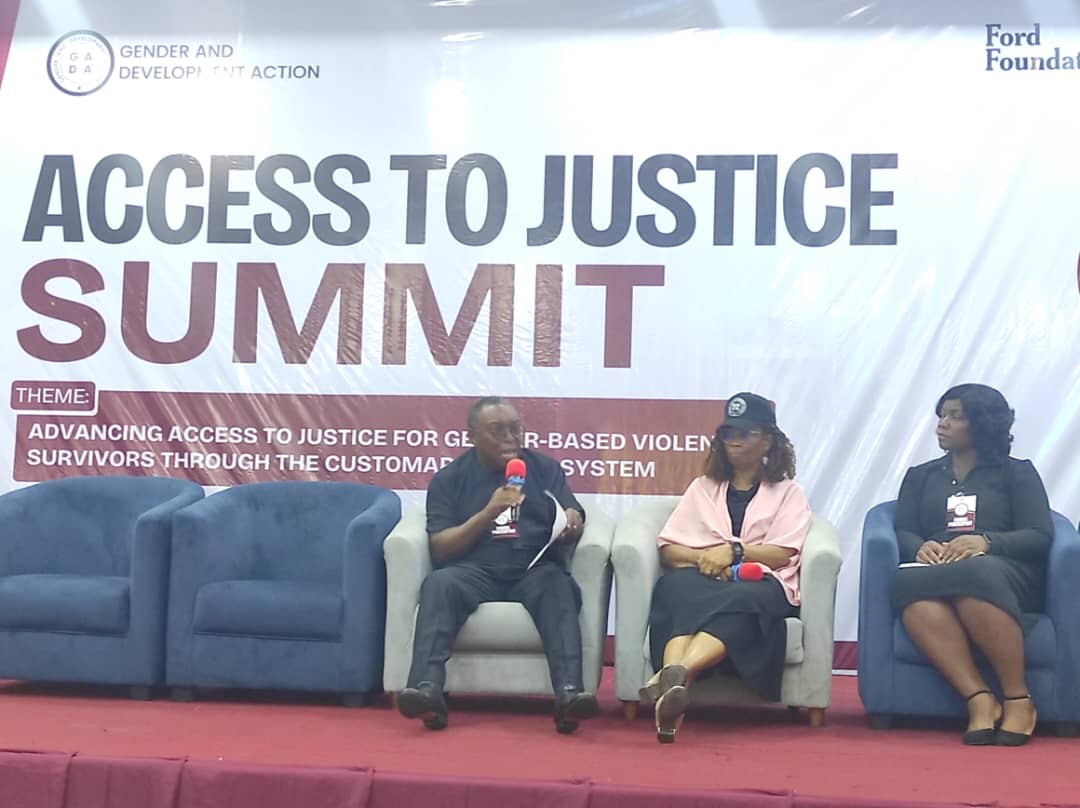
Calabar –In a push to dismantle the structural and cultural barriers to justice for gender-based violence (GBV) survivors, the Gender and Development Action (GADA), with support from the Ford Foundation, hosted a high-level summit on Wednesday in Calabar. The summit, themed “Advancing Access to Justice for Gender-Based Violence Survivors Through the Customary Court System,” brought together an array of legal minds, civil society leaders, law enforcement officials, and community actors to rethink justice delivery, especially in rural areas NEGROIDHAVEN can report authoritatively.
Held at the Metropolitan Hotel, Murtala Mohammed Highway, the event featured keynote speeches, survivor testimony, and technical presentations that spotlighted both the progress and pitfalls in Cross River state’s justice response to GBV.
A 30-Year Fight for Justice…
In her welcome address, Ambassador Nkoyo Toyo, founder of GADA and a pioneering advocate for women’s rights, underscored the summit’s urgency. “The work we began 30 years ago continues,” she said. “The stories we see—of women raped and silenced, girls missing for days, and survivors maimed by their partners—demand a justice system that understands context and heals, not just punishes.”
Toyo, who began her activism through FIDA in the 1980s, decried the barriers survivors face in accessing justice—especially in rural communities where police presence is weak, cultural norms remain repressive, and formal courts are distant or intimidating. She called for a shift toward restorative and culturally relevant justice, arguing that “a retributive system alone may not meet the needs of African societies.”
She also highlighted ongoing reform efforts, including legislative collaboration with the tenth Cross River House of Assembly to modernize the customary court system—a key avenue of justice for many rural dwellers.
State Backs Customary Court Reform…
Delivering his opening remarks, the state Attorney General and Commissioner for Justice, Hon. Ededem Ani, affirmed the state’s commitment to improving legal access for all, particularly GBV survivors.
“One woman experiencing violence is one too many,” Ani stated. He acknowledged that customary courts—being the closest form of justice to rural populations—hold immense potential if reformed and properly resourced. He announced government-backed appointments across the 104 customary courts in the state and ongoing legislative efforts to amend the Customary Court Law to reflect contemporary justice needs.
“This is not merely a legal issue but a social injustice that undermines dignity and inclusion,” Ani said, calling for “collaborative and sustained efforts” across government, civil society, and communities.
Judiciary Emphasizes Jurisdictional Clarity…
In her goodwill message, Hon. Justice Akon Ikpeme, Chief Judge of Cross River State, emphasized the legal structures already in place, including the Child Rights Law (2003), which empowers designated family courts—primarily High and Magistrate Courts—to handle child-related matters.
Justice Ikpeme praised GADA’s initiative, highlighting the need to educate customary court members on their jurisdictional limits and strengthen their ability to handle GBV-related cases ethically and efficiently. “When the law says a court has exclusive jurisdiction, no other court should interfere,” she clarified, particularly in matters of child custody and family welfare.
Next Steps: Training, Law Reform, Community Engagement…
Among the actionable outcomes was a commitment by the judiciary and civil society to deepen training for customary court panel members—especially on GBV cases—and to push for increased female representation on these panels.
Closing the summit, Ambassador Toyo urged participants to move beyond discussion. “We don’t have all the answers,” she admitted, “but today we’ve taken a step toward designing justice that speaks our language, understands our communities, and heals our wounds.”