


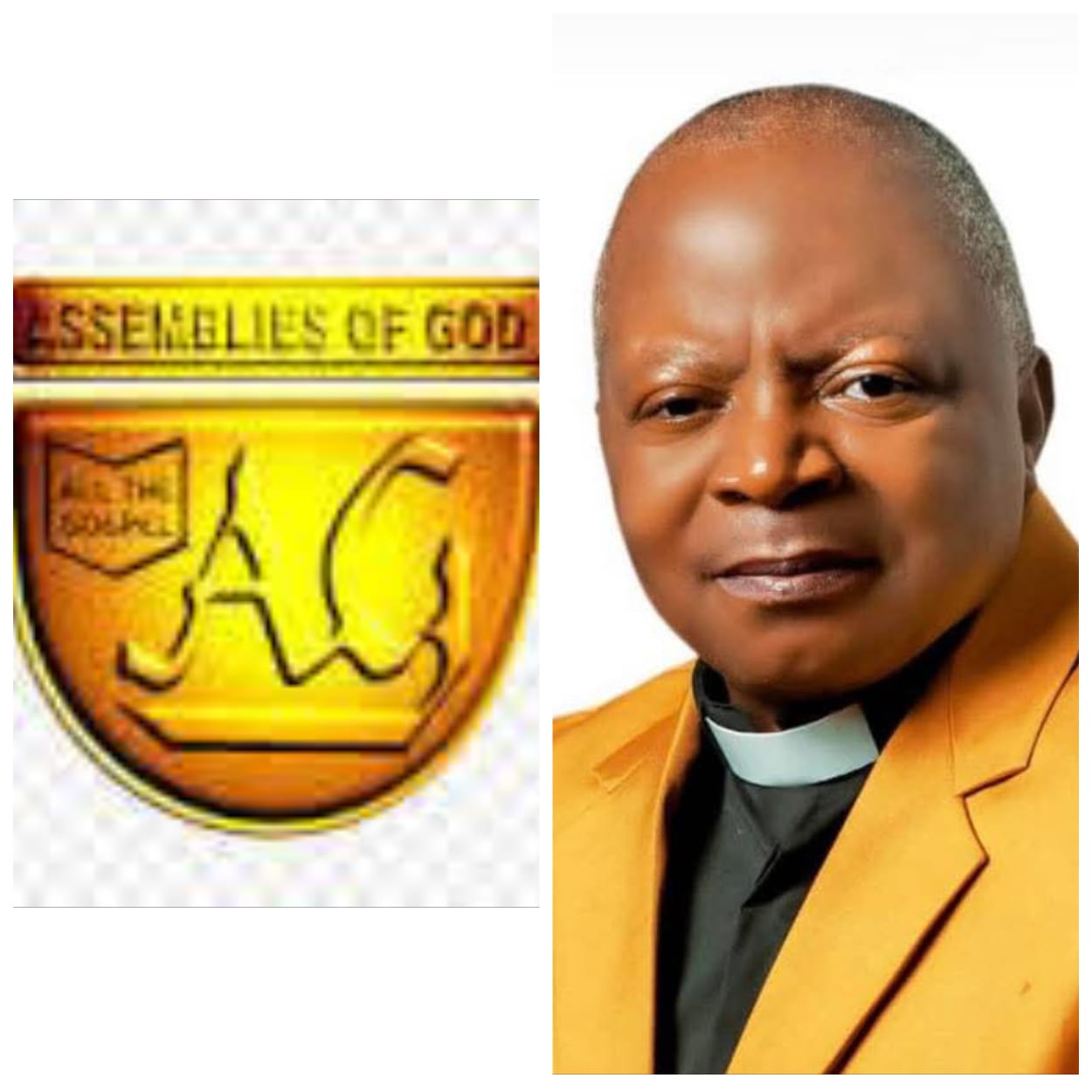
…When the Shepherd Becomes the Centre: The Troubling Questions Raised by the Ushie Ministry at UCOR
There is a question the Church must never be afraid to ask itself: Are our ministers serving God through the people, or have the people gradually been made to serve the minister?
It is an uncomfortable question. It is even more uncomfortable when it arises within a Christian congregation where the language of service, sacrifice, calling and anointing is frequently invoked. Yet, sometimes, uncomfortable questions are necessary.
The prolonged crisis at the University of Calabar Chapel of Redemption (UCOR), particularly the controversy surrounding the ministry and subsequent exit of former Chaplain, Rev. Dr. Joseph Ushie, offers an opportunity to examine that question beyond personalities, factions and legal battles.
At the heart of the controversy is not merely whether one man should remain Chaplain. It is a deeper question about authority, accountability, constitutional governance and the place of the minister within the Church.
The danger of confusing anointing with authority
Every Christian minister understands that the pulpit carries spiritual responsibility. But spiritual responsibility is not necessarily synonymous with unrestricted institutional authority. A minister may be anointed to preach without being authorised to rewrite the constitution. He may be called to shepherd without being empowered to own the flock. He may preside over worship without becoming the institution itself. This distinction appears to have been one of the fundamental fault lines in the controversy surrounding Rev. Ushie’s tenure at UCOR.
According to accounts contained in documents circulated by stakeholders, disagreements emerged between the former Chaplain and the Church Council over several aspects of the administration and worship pattern of the Chapel.
The issues ranged from the appointment of an Assistant Chaplain and the conduct of two Sunday services to established worship practices and the role of the Council in the administration of the church. Individually, some of these disagreements might appear ordinary. Collectively, however, they raise a more important question: Who ultimately governs the Church—the constitution or the occupant of the pulpit?
When the servant wants to redesign the house
Perhaps the most significant document in understanding the controversy is the 42-page publication attributed to Rev. Ushie, titled Who Runs UNICAL Chapel of Redemption and How Many Are They? The document, according to accounts from UCOR stakeholders, went beyond criticism of individual Council members and questioned the very philosophy of council-based governance in the Chapel. Its proposed alternative was a structure in which the Chaplain would exercise substantial ecclesiastical and administrative authority.
That proposal deserves serious attention. Not because proposing institutional reform is inherently wrong. Churches, like every human institution, may need reform from time to time. The question is who has the authority to make that reform, and under what process? A minister appointed under an existing constitution cannot simply inherit the institution and then decide that the constitution under which he was appointed is inadequate. That would create a dangerous precedent. Imagine an employee joining an organisation under a written agreement and subsequently declaring that the organisation’s governing structure should be abolished so that he can become its supreme authority. That is not reform. It is a contest for power.

The Chaplain is not the Church
This is perhaps the most important lesson emerging from the UCOR crisis. The Church existed before Rev. Ushie arrived. The Church will exist after him. The same is true of every Chaplain who has occupied the office.
The Chapel has survived successive administrations, different personalities, different theological emphases, different Councils and different challenges. No minister should therefore become so central to the identity of a congregation that disagreement with the minister becomes synonymous with opposition to God.
This is where the phrase “Man of God” can become dangerously misunderstood. A man of God is not a man who cannot be questioned. A man of God is not a man who cannot be corrected. A man of God is not a man whose decisions are automatically divine decisions. A man of God remains a servant.
When loyalty to a minister replaces loyalty to Christ
Another disturbing feature of prolonged church conflicts is the emergence of personality cults. Members begin to identify themselves not simply as Christians or members of the congregation, but as supporters of a particular minister. Soon, criticism of the minister becomes an attack on the Church. Those who disagree are branded enemies. Those who seek legal redress become “rebels”. Those who question decisions become “demonic”. And before long, the congregation is divided into camps. Team A. Team B. Pro-Chaplain. Anti-Chaplain.
But Christ never died for a faction. He died for the Church. The tragedy is that when a minister becomes the centre of a congregation’s identity, the Gospel can gradually become secondary to loyalty to the personality occupying the pulpit. The question of accountability. One of the most important safeguards in church governance is accountability. The biblical model does not place spiritual leaders above correction. Peter was confronted by Paul. Nathan confronted David. Moses was challenged. Even the apostles operated within a community of accountability. Why, then, should a contemporary minister regard institutional checks and balances as an attack on his calling?
The existence of a Church Council does not necessarily diminish the authority of a Chaplain. Rather, it can protect the Chaplain from becoming overwhelmed by the very authority he exercises. Checks and balances are not necessarily signs of distrust. Sometimes, they are safeguards against human weakness.
The problem with the “untouchable” minister
There is a dangerous theology that has quietly entered sections of contemporary Christianity: the idea that questioning a minister is equivalent to questioning God. It is not. A minister is not God. The pulpit does not make a man infallible.
The clerical collar does not eliminate human ambition. The title “Reverend” does not confer constitutional immunity. And the claim of divine calling does not cancel institutional responsibility. If anything, the greater the spiritual authority entrusted to a minister, the greater should be the accountability expected of him.
The Ushie question
The controversy surrounding Rev. Ushie therefore deserves to be examined beyond the immediate legal and administrative dispute. What kind of ministry was being built? Was the central objective the strengthening of UCOR as an institution, or the strengthening of the office of the Chaplain? Were disagreements about administration simply disagreements over methods, or did they reveal fundamentally different understandings of who should control the Chapel? And perhaps most importantly: Was Rev. Ushie fighting for the Church, or fighting for his place within the Church? These are questions that history, rather than social media, will ultimately answer.
The congregation is not the minister’s possession
One of the greatest temptations of religious leadership is ownership. A pastor builds a congregation and begins to speak of it as my church. A bishop establishes structures and begins to regard them as my ministry. A chaplain gains influence and begins to regard institutional resistance as personal persecution.
But the Church belongs to Christ. The people belong to Christ. The ministry belongs to Christ. The minister is only a steward. And stewards can be replaced. What happens when the minister leaves? Perhaps the most revealing test of any ministry is what remains after the minister leaves. Does the congregation remain? Does the ministry continue? Do the structures survive? Do people still worship? Does the Gospel continue to be preached? If everything collapses because one man has left, perhaps the institution was built around the man rather than around Christ.
Recent developments at UCOR, including the emergence of interim leadership and reports of increased participation in some church activities, provide an opportunity for the congregation to ask what kind of institution it wants to become. The answer should not be another personality cult. It should be a Church governed by Christ, guided by Scripture and administered according to its constitution.
From personality to institution
The crisis at UCOR may ultimately prove to be bigger than Rev. Joseph Ushie. It may be a defining moment for the Chapel. It forces the congregation to decide whether its future will be determined by personalities or principles; by charisma or constitution; by loyalty to individuals or fidelity to institutional order.
The lesson should also extend beyond UCOR. Across Christianity, congregations must learn to distinguish between respecting God’s servants and worshipping their personalities. The Church needs men of God. But it does not need gods of men. A true servant does not demand that the Church revolve around him. He points the Church beyond himself.
He does not say, “Follow me.” He says, “Follow Christ.” And when his season is over, he leaves behind a stronger Church—not a divided congregation fighting over his memory. That may be the most important question the UCOR crisis leaves before the Nigerian Church today: When the man leaves the pulpit, will Christ still be at the centre? The question every Christian must answer.
Agbor Eguma writes from Calabar
EDITORIAL: NEGROIDHAVEN does not share in the opinion of Eguma above. Eguma’s opinion are absolutely his.