

The political calculus of 2027 is already taking shape, and Senator John Owan Enoh, Minister of State for Industry, Trade and Investment, is not leaving little room for ambiguity about the electoral expectations of Cross River state. His message is unmistakable: the state must consolidate its political relevance at the centre by delivering an overwhelming mandate for President Bola Ahmed Tinubu in the forthcoming presidential election.
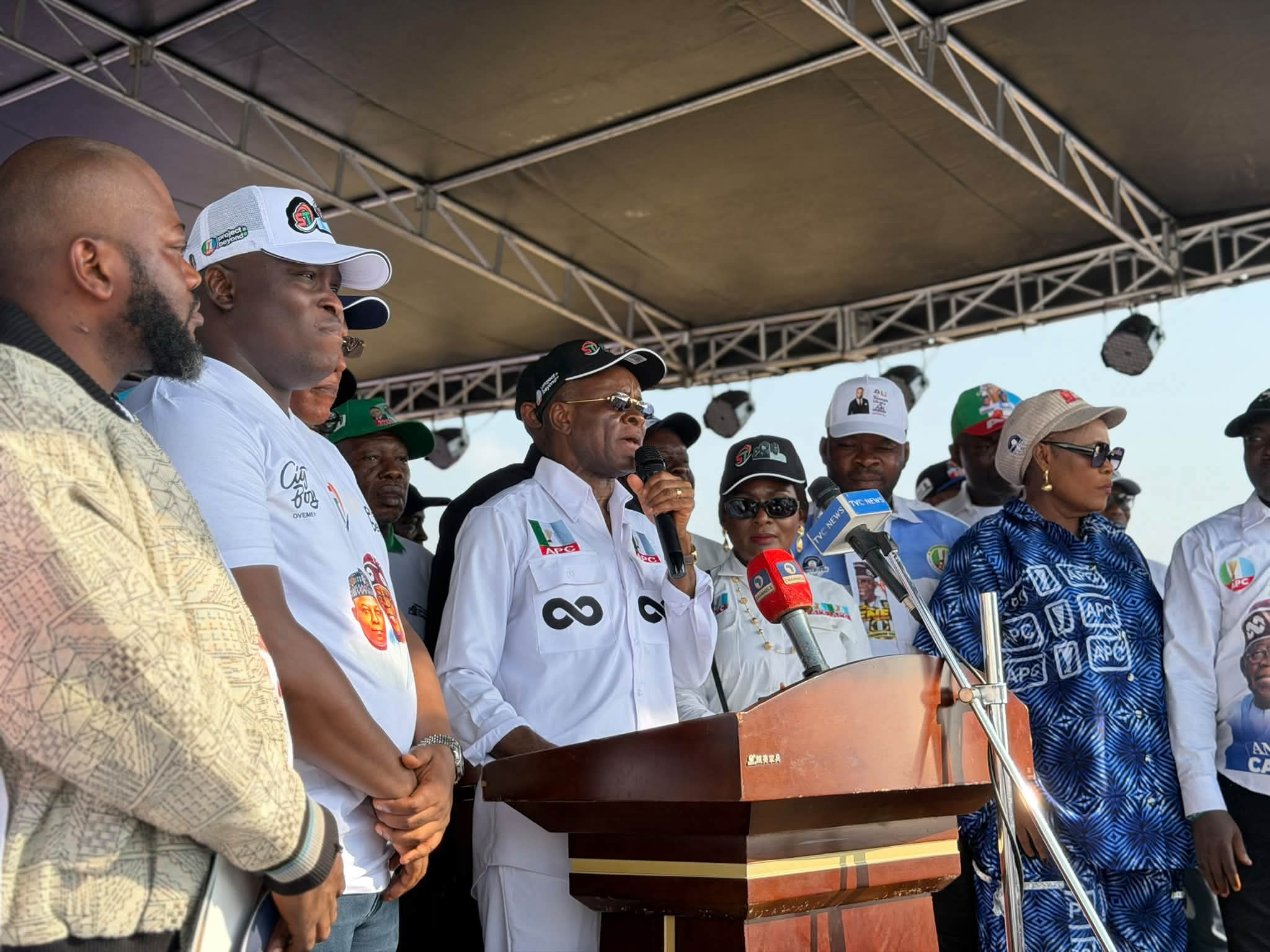
Speaking Friday at the inauguration of Tinubu/Shettima Project Beyond 2027 in Ikom, Enoh issued a clarion call to political leaders, party faithfuls, stakeholders and grassroots mobilisers to transcend the modest electoral gains of 2023 and pursue an unprecedented political victory across all 18 local government areas of Cross River.
He recalled that President Tinubu secured victory in only seven local government areas during the 2023 election, insisting that the forthcoming contest must present a dramatically different electoral arithmetic.
“Out of 18 local government areas, the President won seven in 2023. In 2027, we must leave here with a determination that Mr. President is going to win 18 over 18 in Cross River. And that is possible,” Enoh declared.
Beyond the rhetoric of electoral numbers, the minister sought to situate Tinubu’s presidency within the broader context of transformational leadership, drawing an evocative parallel with Singapore’s legendary former Prime Minister, Lee Kuan Yew, whose visionary stewardship repositioned his nation from relative obscurity to global economic prominence.
According to Enoh, the hallmark of consequential leadership is not an obsession with immediate political gratification, but an enduring commitment to the prosperity of generations yet unborn. He argued that President Tinubu’s reform agenda reflects precisely this philosophy: prioritising the long-term structural redemption of Nigeria over the expediencies of electoral convenience.
“Lee Kuan Yew did not look at politics the way a politician looks at the next election, but at the next generation. That is what President Bola Tinubu is doing. President Bola Tinubu is looking at the next generation, not the next election,” he maintained.
In a robust defence of the administration’s economic reforms, Enoh acknowledged that the policy interventions had imposed considerable strain on households, businesses and ordinary citizens. Nevertheless, he argued that the reforms were indispensable in confronting the deep-seated distortions that had plagued the Nigerian economy for years.
Reflecting on the economic realities inherited in 2023, the minister recalled a period of dwindling foreign reserves, severe constraints on international financial transactions, disruptions in overseas ATM usage and the inability of the country to adequately honour letters of credit. He said these circumstances necessitated decisive, albeit painful, policy choices from the outset of Tinubu’s administration.
While conceding that Nigerians had endured substantial hardship in the process, Enoh expressed optimism that the economy was gradually emerging from its turbulence, with recovery gaining traction and stability beginning to take root.
He likened the experience to the therapeutic bitterness of medicine, arguing that although the reforms were initially unpleasant, their ultimate objective was economic restoration and sustainable national prosperity.
The minister further disclosed that the government’s next phase of economic engagement would be measured not merely by macroeconomic indicators, but by the tangible improvement in the welfare of citizens. He said the administration was now focused on translating economic stabilisation into enhanced purchasing power, greater prosperity and a gradual reduction in the cost of living.
Enoh also asserted that inflation had fallen to approximately 14 per cent, describing the president’s ambition to drive the figure into single digits as a critical component of the government’s economic agenda.
Recognising the precarious realities confronting traders, market women, families and millions of Nigerians struggling to navigate the prevailing economic pressures, the minister assured that the administration remained conscious of the sacrifices citizens were making.
His closing emphasis was that the ultimate dividend of reform must be felt in the homes, markets and daily lives of ordinary Nigerians.
As Project Beyond 2027 gathers political momentum in Cross River, Enoh’s declaration of an 18-local-government electoral sweep is more than a campaign aspiration. It is a formidable political challenge to the party’s machinery, an invitation to strategic mobilisation, and a test of whether the state’s political leadership can convert its organisational strength, influence and grassroots presence into a commanding electoral statement in 2027.
Osonabiji S.Ojong writes from Ikom in Cross River Central Senatorial District