


…Traditional leaders, CSOs, and citizens decry police inaction
…Demand stronger enforcement framework in proposed GBV legislation
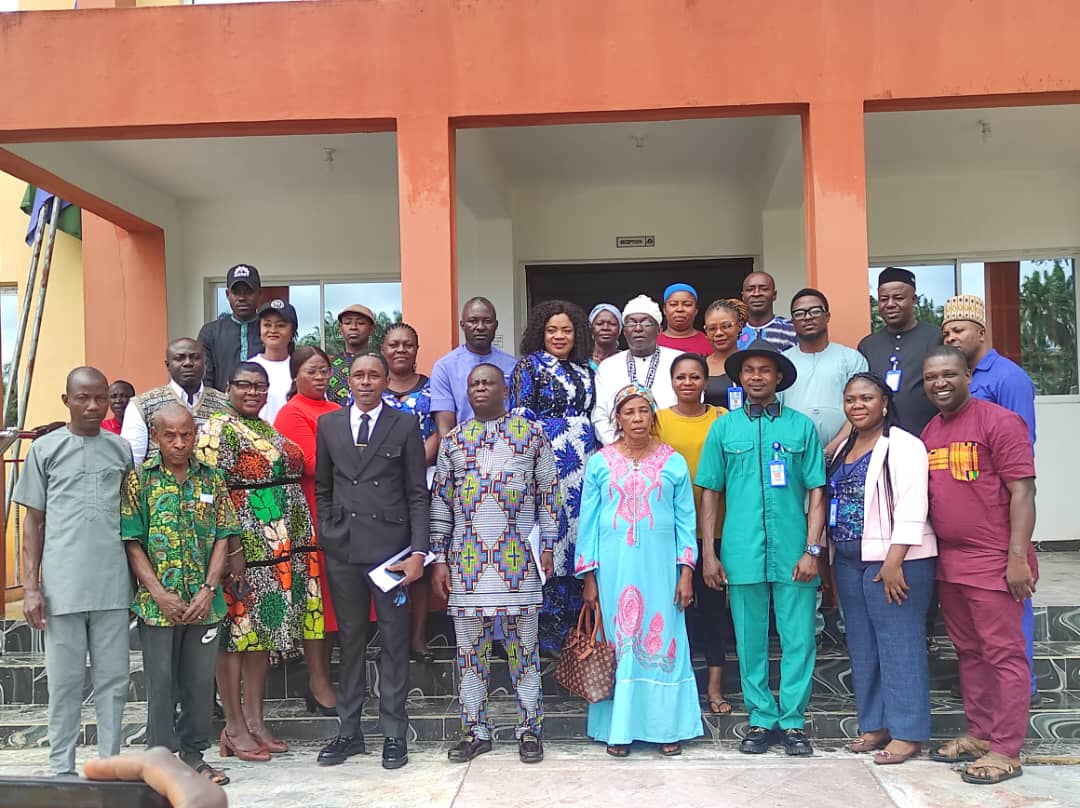
Bakassi LGA | At a public hearing held Tuesday in Ikot Effiom, headquarters of Bakassi Local Government Area (LGA), key stakeholders from across the community expressed concern over the enforceability of a proposed Gender-Based Violence (Prohibition, Prevention & Response) Byelaw, 2025. While the initiative was broadly welcomed, participants, including traditional leaders, clergy, civil society organizations (CSOs), and citizens, called out the persistent uncooperative attitude of the police and stressed the need for a robust, actionable enforcement strategy NEGROIDHAVEN can report.
The byelaw, sponsored by Hon. Prince Bassey Mkpeti of Ward 6 and supported by colleagues in the 7th Bakassi Legislative Assembly, seeks to provide a legal framework to prevent, prohibit, and respond to gender-based violence in the LGA. The hearing aimed to harvest community input to fine-tune the proposed legislation.
GBV remains a pervasive issue in Cross River State, with anecdotal evidence pointing to rising incidents, especially in impoverished communities like Ikang. The byelaw is part of a broader effort supported by civil society, including the Gender and Development Action (GADA), to localize GBV response mechanisms.
Stakeholder Contributions & Debate Highlights
HRH Antigha Antigha Okon, the Village Head of Ikang community, voiced a major concern shared by many: “There is Gender-Based Violence in Bakassi, especially in Ikang. Women are vulnerable because of poverty. But what makes it worse is that the police are not helping matters—they are not cooperating.”
This sentiment was echoed by several others who lamented the lack of responsiveness from security agencies. “Enacting a law is simple,” HRH Okon added, “but enforcing it—that’s the real issue.”
Leader Grace Bassey responded, assuring the public that the proposal has an implementation and monitoring framework attached to the draft circulated at the hearing. She stressed that enforcement structures such as Community Crisis Management Teams (CCMTs) were embedded in the framework.
A representative of GADA, namely, Roseline Unimuke, proposed key amendments, including an expanded definition of rape to cover penetration of the vagina, anus, or mouth by any object. The group also called for life imprisonment as the maximum penalty for convicted rapists.
Another participant, Edem Antigha Edet, questioned the absence of provisions addressing violence perpetrated by women against men. “If we want justice to be fair, it must be gender-neutral,” he said. Edet’s sentiment found acceptance amongst the majority of the participants who simultaneously chorused support for his opinion.
A member of the clergy, namely, Pst. David Owo, urged the inclusion of surveillance measures for child abuse, citing children loitering during school hours as a red flag. Maurice, another participant, pushed for the inclusion of female genital mutilation (FGM) as a harmful traditional practice. “This is an abuse we overlook too often,” he remarked.
Many attendees agreed that traditional practices should not be exempt from scrutiny under the proposed byelaw.
Hon. Mkpeit reaffirmed his commitment: “This byelaw is a commitment to safeguarding women, children, and vulnerable groups in Bakassi. We will take these recommendations seriously.”
Maurice Eyo, the state Governor’s aide on community relations warned, “If the police remain indifferent and no budget is allocated for implementation, this byelaw will not go beyond paper.”
Another advocate stressed the need for offender’s register, a dedicated legal team to facilitate justice in the face of police lackadaisical attitude and survivor-centered services in local communities.
The 7th Bakassi Legislative Assembly is expected to revise the draft based on stakeholder feedback and table the final version for a vote in the coming weeks. Implementation will depend on coordinated efforts between the LGA, police, traditional authorities, and civil society partners.
The general mood at the public hearing was of the opinion that the byelaw proposal signaled a bold step in Bakassi’s campaign against gender-based violence, but it also revealed deep-seated frustrations with law enforcement and implementation capacity. The participants noted that if improved upon as suggested, passed and properly enforced, the byelaw could serve as a model for other LGAs in Cross River State confronting similar social challenges.