


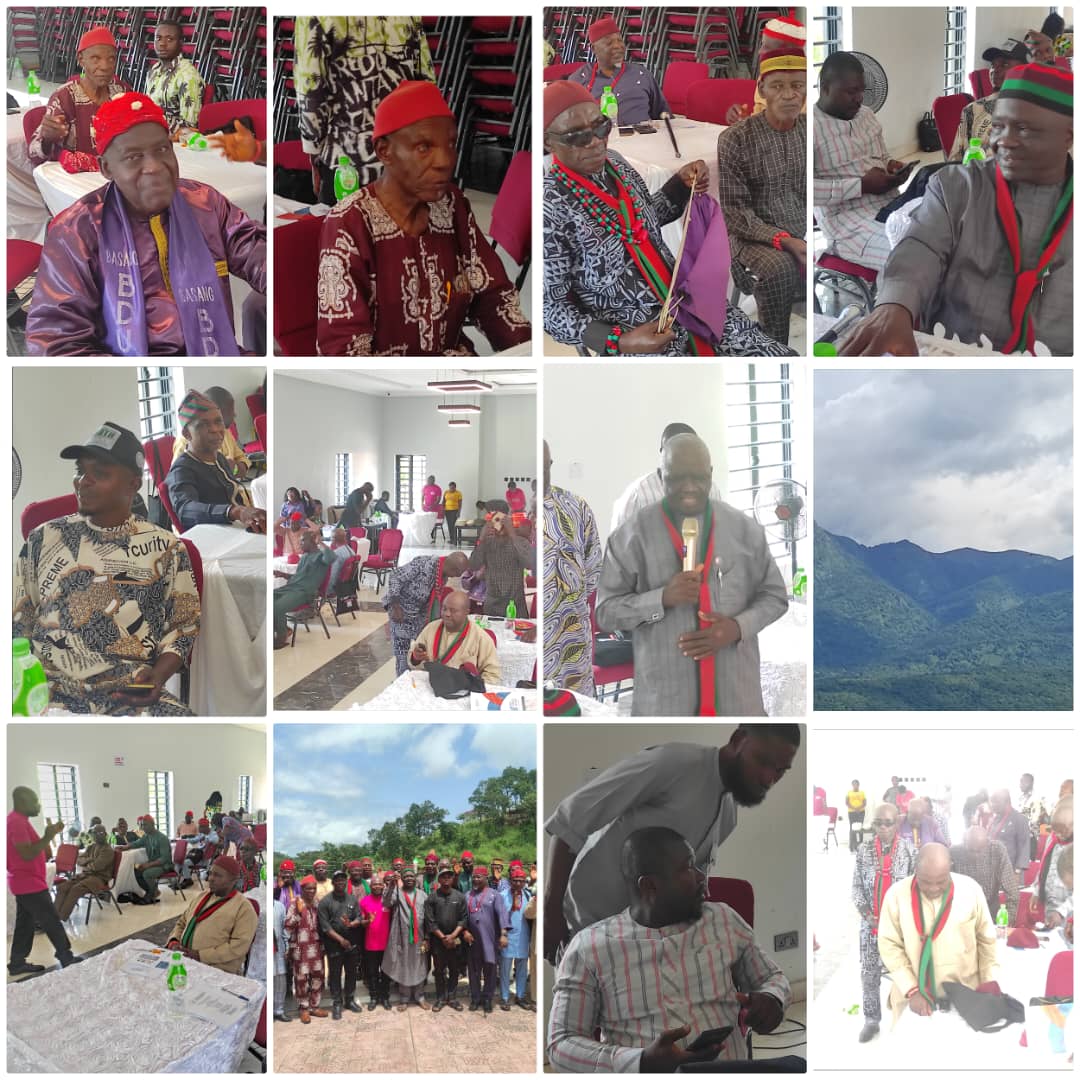
SANKWALA, OBANLIKU LGA – In the quiet wisdom of an Obanliku chief, the entire thesis of effective male allyship was suddenly, brilliantly clear.
“A house built with shouting will crumble faster than a hut built with peace.”
He was quoting a proverb from a case study presented by Dr. Vincent Dania of Centre LSD. But in this council hall, facilitated by Dr. Elijah Terdoo Ikpanor, it was no longer just a story. It was a mirror held up to their own past failures and a blueprint for their future authority. The lesson from Dr. Dania’s presentation hung heavy in the air: A skilled male ally listens before acting, acknowledges the humanity of both sides, and uses his authority to build peace, not fear.
This was the profound shift occurring in Obanliku: traditional power was being re-forged into a tool of partnership, guided by the simple, unassailable truth of another local analogy. “If you have only one hand, you cannot do it,” a chief stated, explaining the practical need for two hands to tie a bundle of firewood. “So also it is with life… That is why we need our female counterparts as partners.”
From Conviction to Consistency: The Rulers’ New Playbook
Under the guidance of facilitator Dr. Dania, who articulated Male Feminism as a stand for “fairness, respect, and opportunity,” the session moved from abstract principle to enforceable social policy. The leaders were actively rejecting the model of acting “out of anger, not wisdom,” and embracing strategic patience.
One traditional ruler stood and detailed his new, deliberate protocol for justice, specifically for widows. “When somebody die in my community, leaving a woman, I will call the family of that woman and come together,” he declared. This was no longer a discussion; it was a decree from within the system, an application of dialogue over decree.
Another elder spoke of overturning patrilineal inheritance, a shift that once would have caused uproar but was now being managed through community engagement. “And we have seen it working,” he noted, the success a testament to the careful, respectful work of building that “hut with peace.”
The Bystander in His Own Home
Perhaps the most profound testimony came from a leader who described his personal journey into becoming an “active bystander” within his own home.
“This morning, before I left for this gathering… I had to wash the plates around the house. I had to stay back and watch the kids,” he shared. He was using the principle of distraction and delegation not at a wedding, but in his own kitchen, ensuring the peace of his household.
He addressed the silent question hanging in the room, the fear that such acts diminish a man. “It doesn’t change your status as a man,” he asserted, his voice firm. “It doesn’t matter who does what… Let us always partnership with our wives.”
This was the ultimate blend of philosophy and local action. Led by the strategic framework of Dr. Dania and the grounded facilitation of Dr. Ikpanor, the chiefs of Obanliku are proving that the strongest hand is not the one that strikes, but the one that reaches out, in partnership, to the other.