

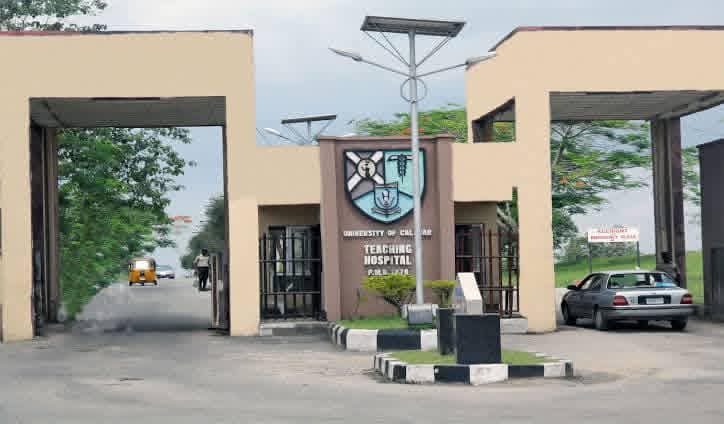
CALABAR — The University of Calabar Teaching Hospital (UCTH) says it has expanded its specialist healthcare services and embarked on major infrastructural upgrades aimed at improving healthcare delivery and raising medical standards in Cross River State and beyond NEGROIDHAVEN can report.
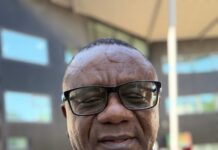
Chief Medical Director of the hospital, Prof. Ikpeme A. Ikpeme, disclosed this during an interaction with journalists after a tour of facilities and ongoing projects within the institution.
Ikpeme said the hospital had significantly improved its capacity in specialist medical procedures, noting that several advanced treatments previously sought outside the state are now being carried out successfully at UCTH.
According to him, the hospital now performs complex orthopaedic procedures including hip and knee replacement surgeries, arthroscopy and sports medicine, as well as minimally invasive “keyhole” surgeries in different medical fields.
“We do hip replacements, knee replacements, arthroscopy and sports medicine. We can replace your anterior cruciate ligament because we have the equipment, personnel and training,” he said.
He added that the hospital also conducts brain tumour surgeries, spinal procedures, advanced urological operations and interventional radiology services.
“If your uterus is giving you a problem, we can take it out using a one-centimetre incision and cameras. If your appendix is giving you a problem, we can remove it and send you home the next day,” he said.
The CMD noted that the hospital currently operates about 62 clinical and non-clinical departments with between 30 and 38 wards and clinics, many of which have undergone renovations, remodelling or upgrades.
He explained that the hospital was also expanding its emergency response capacity through the construction of a new Department of Emergency Medicine with over 100-bed capacity, trauma bays, intensive care units and emergency theatres.
Ikpeme stated that UCTH, which has an 850-bed capacity, serves patients from across Cross River state, neighbouring states and nearby countries including Cameroon and Equatorial Guinea.
According to him, increasing patient demand continues to place pressure on available facilities and resources.
The CMD identified funding, infrastructure expansion and medical equipment procurement as major areas of need, calling on individuals, organisations and governments to support the hospital.
“There is nothing that says public-spirited individuals and organisations cannot come and support us with infrastructure, equipment and funding,” he said.
On energy supply, Ikpeme disclosed that the hospital currently depends on a combination of public electricity, generators and a seven-megawatt solar captive power plant provided through a Federal Government intervention.
He also addressed concerns over staff attitude and discipline, stating that the hospital operates a reward-and-punishment system aimed at ensuring ethical conduct and quality patient care.
According to him, management investigates complaints of negligence through internal post-incident audits involving senior medical personnel.
Ikpeme further dismissed allegations that the hospital discriminated against house officers based on ethnicity, insisting that UCTH does not reject workers or trainees because of their ethnic background.
“We do not discriminate against anybody based on where the person comes from,” he said.
The CMD maintained that the hospital would continue pursuing reforms and investments aimed at positioning UCTH as a leading tertiary healthcare institution in the region.