


For more than a decade, founder Blessing Samuel and the work that grew into Teens Issues Initiative have been rooted in efforts to confront some of the most persistent barriers to dignity and opportunity facing children, adolescents, and vulnerable communities in Cross River state.
The organisation traces its roots to Teens Issues Africa, a radio and television programme launched with the Cross River State Broadcasting Corporation, through which Blessing Samuel began raising public awareness on issues affecting young people. That early broadcast platform laid the foundation for what would later become Teens Issues Initiative, built on a simple conviction: young people should not have to accept harmful practices, exclusion, or lack of opportunity as the price of growing up. Over the years, that conviction has developed into a body of community-based programming spanning girls’ rights, harmful traditional practices, menstrual health, education access, displacement, and social inclusion.
Confronting Harmful Practices Affecting Girls
Among the organisation’s central campaigns is its work against female genital mutilation (FGM), raising awareness of the practice’s health, dignity, and human rights consequences. Through direct community advocacy and public education, often carried out in areas where the practice remains deeply rooted, Teens Issues Initiative has worked, including in partnership with the Akovou Foundation, to shift conversations around girls’ bodily autonomy and protection.
For the organisation, this campaign reflects a broader belief: that girls deserve the freedom to grow up without harmful practices dictating their futures.
Menstrual Health as a Matter of Dignity
For many girls in underserved communities, menstruation can become a barrier to regular school attendance and participation. Limited access to menstrual products, accurate information, and safe facilities can quietly affect a girl’s education and wellbeing.
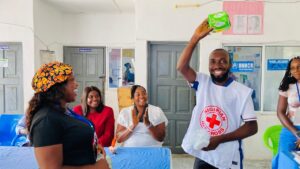
Teens Issues Initiative has responded through both education and material support. During its 2026 Menstrual Hygiene Day outreach, the organisation distributed sanitary pads alongside menstrual health education, reinforcing conversations about dignity, confidence, and continued participation in school life.
This work has since grown into My Period and I: Flowing with Confidence, an educational book created to help secondary-school girls understand and manage menstruation with greater knowledge and confidence. The organisation’s goal is to distribute the book free of charge to girls in secondary schools with limited access to reliable menstrual health information.
A Second Chance for Those Left Behind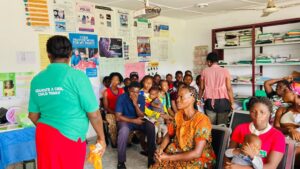
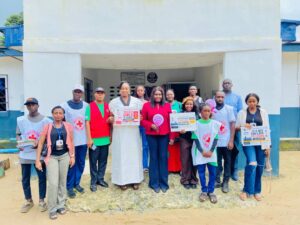
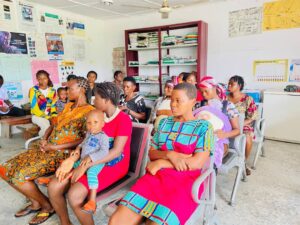
In June 2026, Teens Issues Initiative extended its work into another area of human rights concern: education access for displaced and vulnerable populations. To mark World Refugee Day on June 20, the organisation established a community learning centre in Bakassi for people whose education had been interrupted.
The resulting programme, Second Chance Education: Not Too Late to Learn, is built on a straightforward premise: that displacement, early parenthood, dropping out, or economic hardship should not permanently close the door to learning.
In its first cohort, 13 learners enrolled in basic and adult education, while 35 joined vocational skills training. Classes run three times a week with the support of volunteer teachers and community partners, offering multiple entry points through foundational literacy, vocational skills, and pathways back into formal education.
The initiative has benefited from collaboration with the Cross River State Agency for Adult and Non-Formal Education and the God of Daniel Foundation, with support from the Nigerian Red Cross Society, Bakassi Branch.
For learners who once believed education was permanently out of reach, the centre represents more than a classroom. It represents a second chance.
Partnership as a Way of Working
Across its programmes, Teens Issues Initiative has increasingly built its work through collaboration with community organisations, volunteers, educators, public institutions, and humanitarian actors.
Its work now spans rural communities, displaced populations, schools, and girls facing barriers to education and health information. The organisation has also engaged in environmental and climate-related advocacy, recognising the connection between environmental conditions and the rights and wellbeing of vulnerable communities.
From Awareness to Action
Teens Issues Initiative’s approach reflects a broader philosophy: awareness should lead to action. The organisation seeks to connect public education with practical support by educating girls about their health, distributing menstrual products, challenging harmful practices, creating learning opportunities, and helping vulnerable people reclaim opportunities they have lost.
From protecting girls against harmful practices, to promoting menstrual dignity, to creating pathways back into education for displaced and vulnerable learners, Teens Issues Initiative continues to build around one belief: every person deserves the opportunity to live with dignity, learn, participate, and shape their own future.