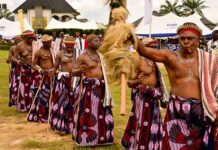



Ugep—The 2025 edition of the Leboku International New Yam Festival in Ugep, Yakurr Local Government Area, has sparked outrage and calls for reform following the controversial Libini performance, which many indigenes say ridiculed the paramount ruler of Yakurr, and Obol Lopon of Ugep, in a manner that disrespected the throne and embarrassed the community NEGROIDHAVEN can report.
The Libini, a satirical cultural performance staged annually during Leboku, is traditionally regarded as a platform for satirizing excesses and correcting wrongs through chants and mockery. However, this year’s performance has been widely condemned for degenerating into what critics describe as “body-shaming” and “character assassination” of the Obol Lopon –Ofem Ubana Eteng.
Jesam Okoi Omini Edet, a concerned indigene of Yakurr, first drew attention to the matter in a widely shared social media post, where he urged the Yakurr traditional council to urgently “review and scrap out the demeaning aspect of Libini.” Her remarks have since triggered a flurry of debates within the community, across Cross River state, and on social platforms.
“This year’s Libini has brought reproach to the king and, by extension, to all Yakurr people,” one resident lamented, pointing to viral videos in which performers openly labeled the Obol Lopon a “yahoo king.” “What should have been a moment of cultural pride has now gone global for the wrong reasons,” another added.
While some voices defend the practice as an ancient corrective institution designed to test the king’s tolerance and ensure accountability, many argue that the cultural context has shifted. They contend that what was once symbolic satire has now become an avenue for personal insults, defamation, and loss of dignity for the revered throne of Umor-Otutu.
“Culture is dynamic, not static,” one commentator stressed. “Just as the Yakurr people adjusted aspects of Lobo to suit modern sensibilities, there is no reason why Libini cannot also be reformed. A festival meant to promote unity should not be allowed to ridicule the symbol of that unity.”
The debate reflect growing concerns over the balance between preserving cultural traditions and protecting the integrity of institutions. Observers warn that unchecked excesses during Libini could weaken reverence for authority, deepen divisions in Yakurr society, and damage the international image of the Leboku Festival, which has long been celebrated as a rallying point for Ugep heritage.
Stakeholders are also calling attention to the implications for tourism. The Leboku Festival attracts national and international visitors each year, but indigenes worry that images of their revered monarch being mocked in such fashion could undermine the festival’s credibility as a showcase of Yakurr pride and hospitality.
Calls are now mounting on the Yakurr traditional council, elders, and custodians of culture to intervene decisively. Suggestions range from regulating the themes of Libini to phasing out aspects that encourage ridicule of the throne, while retaining the festival’s original intent of promoting accountability and cultural expression.
As the dust settles, the controversy surrounding Libini has opened a broader conversation about the evolving role of tradition in modern society. For Ugep in particular and Yakurr in general, the pressing question remains whether the community can preserve the essence of Libini without compromising the dignity of its monarch or the integrity of its most celebrated festival.