


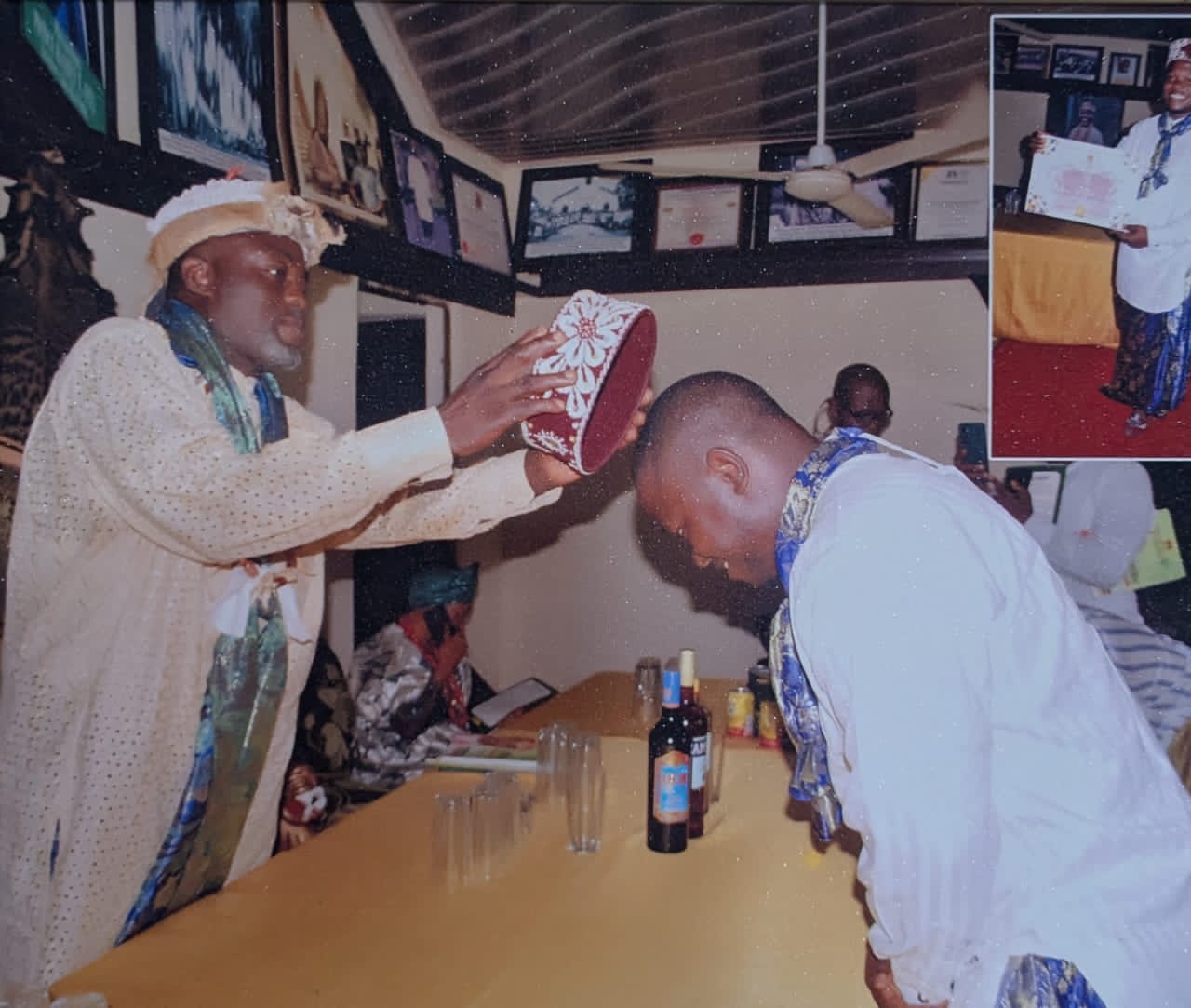
In a ceremony blending academic prestige with traditional honor, Dr. Samuel Akpan Bassey, a globally recognized scholar in environmental ethics, was among seven distinguished individuals conferred with chieftaincy titles by the Kasuk II Qua Clan of Calabar Municipality, Cross River state NEGROIDHAVEN has confirmed.
The historic event, which took place on Sunday, December 14 at the palace of His Royal Highness Ntoe (Dr.) Ededem Okon Ayito, marked the first-ever conferment of chieftaincy titles by the clan. Dr. Bassey, renowned for his pioneering “Eco-Anthropoholism” theory in environmental philosophy, was honored for his contributions to academia and global thought leadership.
In his address, the Clan Head, HRH Ntoe (Dr.) Ededem Okon Ayito, emphasized that the titles were being bestowed upon “well-deserving, industrious men of integrity” who have distinguished themselves in various fields, including academia, engineering, medicine, and law. “In this computerized age,” he stated, “we have personalities who have excelled. It is my honor to confer these titles on such individuals.”
Dr. Bassey, a native of Akwa Ibom state based in Calabar, holds a Ph.D. in Environmental Ethics from the University of Calabar and serves as a researcher and editor with affiliations in Nigeria and Indonesia. His theory of Eco-Anthropoholism, which proposes a balanced ethical framework for human engagement with the environment, has been presented at international symposia in Turkey and Albania and earned him the Philip L. Quinn Prize in 2021.
The Chairman of the Planning Committee, His Highness Esi-Mfam Omin Edem Agbor, described the event as “epoch-making” and noted that the recognition of such figures would help propel the Kasuk II Qua Clan “to the next level of community development.”
Other awardees included Elder Effiong Richard Richard, Chief Engr. Daniel Hogan Itam (Ph.D.), and Hon. Undiandeye Peter Akonfe, among others. Each was charged to remain an ambassador of the community and a role model to younger generations.
Observers opined that the ceremony not only celebrated individual achievement but also highlighted the evolving role of traditional institutions in recognizing modern excellence, bridging the gap between cultural heritage and contemporary professional accomplishment.