


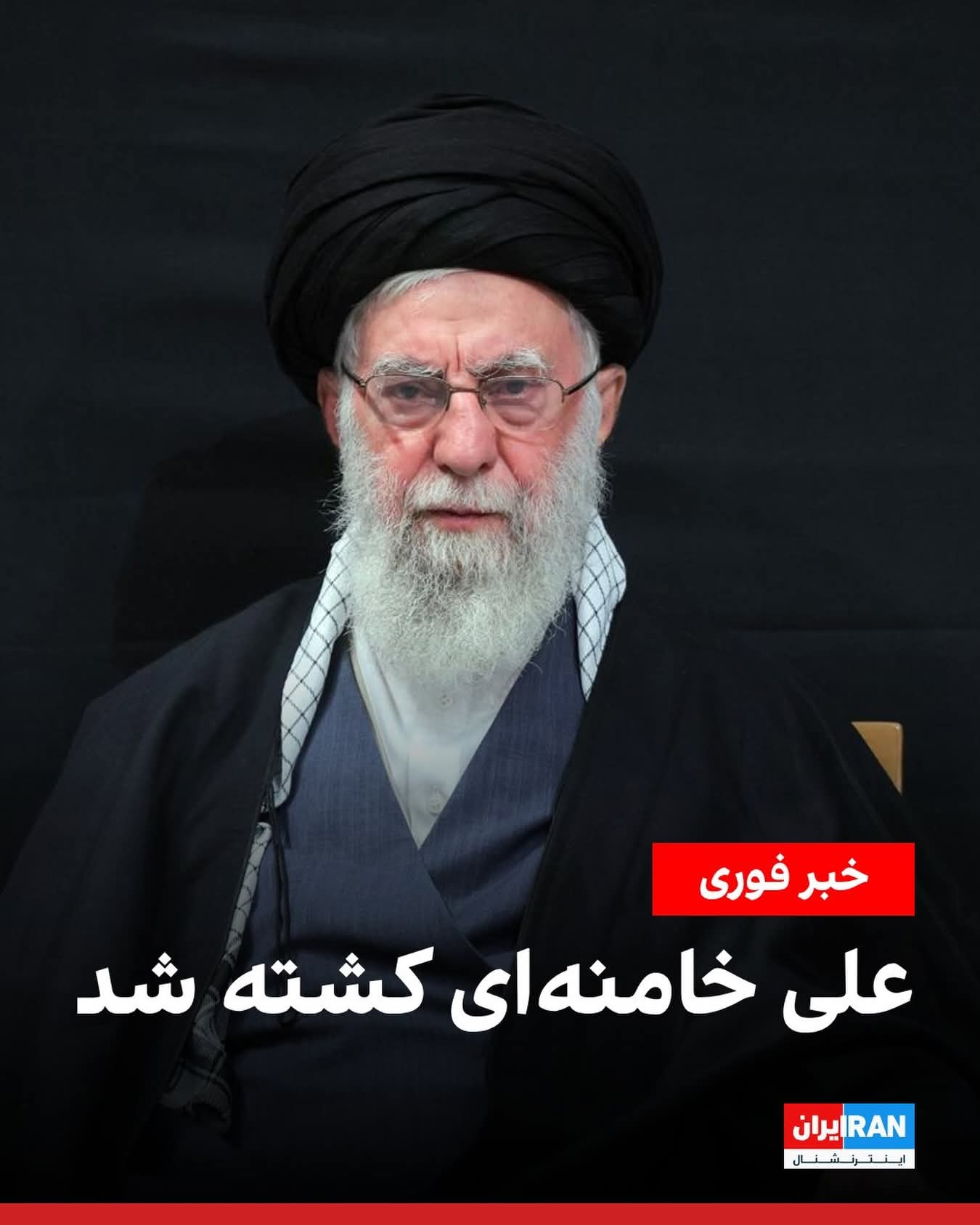
TEHRAN — Iran’s Supreme Leader, Ali Khamenei, has been killed in an Israeli airstrike on Tehran, senior Israeli officials confirmed Saturday, marking a dramatic turning point in the Islamic Republic’s 47-year history NEGROIDHAVEN can report.
Israeli authorities said Khamenei’s body was recovered from the rubble of a targeted strike on a high-security compound in the Iranian capital. Documentation of the remains was reportedly presented to Prime Minister Benjamin Netanyahu shortly after the operation.
The strike was part of a broader military campaign described by United States Central Command as “Operation Epic Fury,” which involved coordinated Israeli and American aerial assaults on strategic targets across Iran. CENTCOM released video footage showing U.S. fighter jets launching from aircraft carriers and cruise missiles being fired toward Iranian territory. The command stated there were no reports of U.S. casualties or combat-related injuries.
Israeli defense sources said the operation targeted senior Iranian leadership and key military infrastructure. Khamenei, who had ruled Iran since 1989, was reportedly inside the compound when it was struck.
Khamenei, born in Mashhad in 1939, rose to prominence following Iran’s 1979 Islamic Revolution. After serving two terms as president beginning in 1981, he was selected by the Assembly of Experts as Iran’s second Supreme Leader following the death of Ayatollah Ruhollah Khomeini in 1989. For more than three decades, he served as the country’s highest political and religious authority, shaping Iran’s domestic governance, foreign policy, and regional strategy.
His death creates an immediate leadership vacuum at the apex of the Islamic Republic’s power structure. Under Iran’s constitution, the Assembly of Experts is responsible for selecting a successor, though the process could unfold amid heightened regional tensions.
The killing of Khamenei significantly escalates hostilities between Israel and Iran, adversaries long engaged in shadow conflict across the Middle East. Analysts warn the development could trigger retaliatory actions from Iranian-aligned groups operating in Lebanon, Iraq, Syria, and Yemen suggesting the Middle East is most likely to be unstable.
Washington has not issued a statement explicitly confirming that Khamenei was a direct target of U.S. forces, though American assets participated in the wider strike package, according to CENTCOM.
Global markets reacted swiftly to the news, with oil prices surging amid fears of broader regional conflict in the energy-rich Gulf.
Khamenei’s death marks the most consequential event in Iran’s political system since 1989 and signals a profound shift in Middle Eastern geopolitics. Further developments are expected as Iranian authorities address the nation and clarify succession arrangements.