

A multi-million-dollar fishery project that promises to create jobs, slash the price of ice fish and generate sustained revenue for Cross River State has been sealed under a 25-year renewable concession.
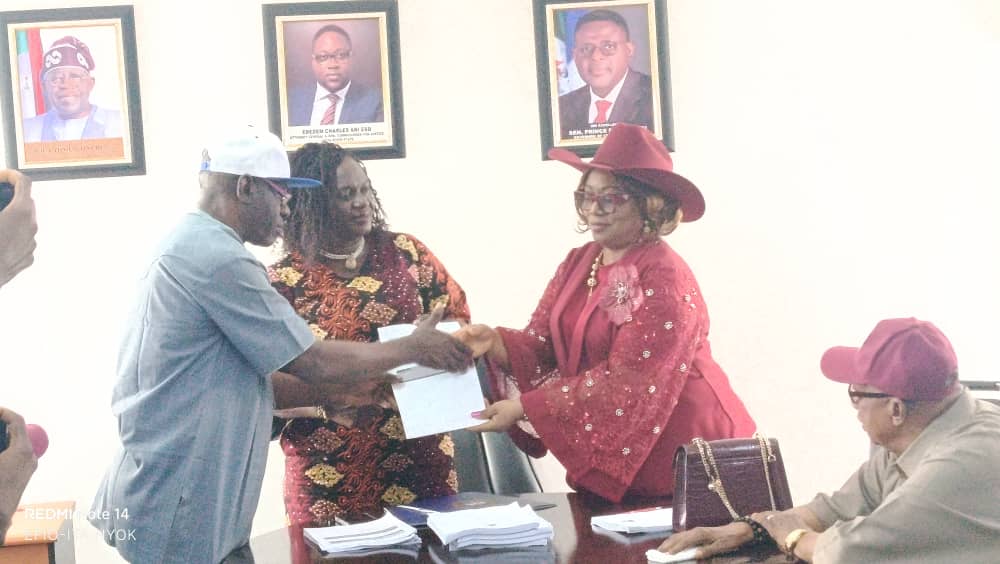
The deal, executed between the state government and AMET Limited, led to the formation of Eburutu Fishery Development Limited, a special purpose vehicle that will implement the project. It is fully funded by the private partner, with the state contributing no capital.
Margaret Ovonlen, Managing Director of Eburutu Fishery Development Limited, said she brought the project home after seeing similar initiatives succeed in other African countries.
“I grew up here in Cross River State. My parents are from here. I schooled in Holy Child Convent and Holy Child Secondary School. I worked in Nigeria for 33 years. I got retired, but I refused to be tired,” she said.
“I went outside and I saw this project being given to other African countries. I asked, why don’t you bring it to Nigeria? They said, why don’t you go to Nigeria and establish it? We will support you. So I brought it here.”
Ovonlen described the venture as a game-changer that would raise living standards and create multiple income streams.
“It’s a multi-million dollar project. It’s going to bring in job opportunities. It’s going to raise the standard of living. It will drop the cost of living. You know what it means to buy a packet of ice fish today. Ours is going to be rock bottom cheap,” she said.
“We are bringing 100% funding. The state government has no financial commitment here. In bringing the 100% funding, we are saying to the state, you take 40, AMET takes 60 for now. The first 25 years, 60-40. Then after the next 25 years, it will switch. 60 will go to the state, and AMET will take 40.”
She added that the 25-year concession is renewable for another 25 years. “It means we are creating perpetuity in terms of sustenance for the children of Cross River State. My great-great-grandchildren will benefit from it. Your great-grandchildren will benefit from it.”
The project is expected to include a fish processing plant with a feed mill and a terminal complex that will attract toll revenue. Ovonlen said recruitment would be strictly based on merit.
Community leader Muri Ekpenyong Ndiyo said the initiative would transform Calabar South, an area that has long lacked government presence.
“This project is going to be a turnaround. It’s going to create employment for my people. For such a long time, we’ve never had any government presence in the Calabar South. And this project is going to be the game changer. Our people are not going to be on the streets again. They are going to be gainfully employed,” he said.
Barr. Rosemary Ona, Permanent Secretary, Ministry of Justice, said the ministry carefully vetted the concession agreement.
“What we did was that when AMET brought the proposal, we looked at it and we found it to be beneficial to the state. What has been done will protect the government’s interests as well as the company’s interests. It’s a Public Private Partnership, so it’s a win-win,” she said.
Ona explained that the agreement contains clear milestones, deliverables and termination clauses. “If the concessionaire does not meet up with his obligations, we have a right to terminate. The agreement also provides for a joint venture. AMET is the principal partner and the state government, and both parties have now formed a company called Eburutu Fishery Development Limited. Government has a key stake in the project.”
Evare Riman, Business Manager, Public Sector, First Bank Nigeria, pledged the bank’s support.
“As a bank, we’re happy to work with Eburutu Fishery Development Limited to ensure that this project becomes a huge success. Whatever the financing structure is, we will deploy our experience to come up with a workable structure,” she said.
Dr Odey Ikongah, Permanent Secretary, Ministry of Livestock, Aquaculture and Fisheries Development, thanked the Ministry of Justice, the former and current commissioners, and the host community for providing land.
Stakeholders agreed that the project’s success would depend on collective commitment to its objectives of job creation, food security and long-term economic growth for Cross River State.