

Calabar— A member of the House of Representatives, Hon. Victor Abang, has explained why construction work has yet to begin on a major federal road serving parts of Cross River state, saying that budgetary provision does not automatically translate to immediate project execution.
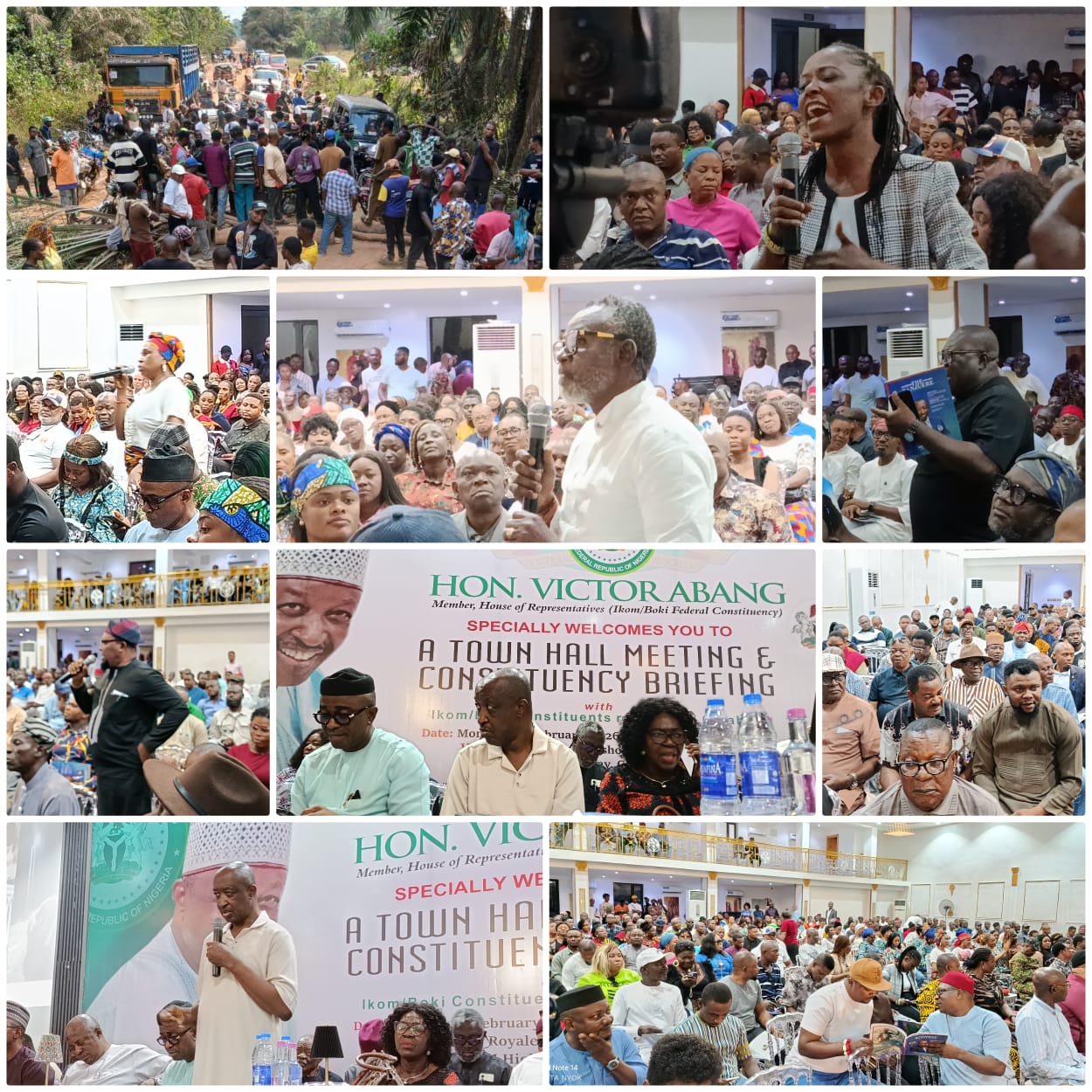
Abang, who represents the Ikom/Boki Federal Constituency, made the clarification on Monday during a town hall meeting and constituency briefing held in Calabar, following growing public complaints over the poor state of the Ikom/Obudu Federal Highway and calls for protests and road blockades especially in the said road.
According to the lawmaker, the federal government has already made provisions for the construction and reconstruction of the said route in the national budget, but delays persist due to the gap between budget approval and project actualisation.
He disclosed that evidence of the budgetary provision was contained in official correspondence from the Office of the Chief of Staff to the President, in response to an earlier appeal by the Governor of Cross River state requesting federal intervention on the Ikom/Obudu road.
“Budgeting and actualisation are two different things,” Abang said. “The fact that a road is captured in the budget does not mean that construction will begin immediately.”
The legislator explained that he, alongside other lawmakers whose constituencies are affected by the road, had engaged the Minister of Works to press for the commencement of the project. He said the group included members of the House of Representatives and senators representing communities that rely heavily on the route for economic and social activities.
Abang noted that sustained lobbying, combined with the intervention of the state government, was responsible for ensuring that the road project was included in the federal budget in the first place, adding that further engagement with relevant authorities would continue until construction begins.
He cautioned residents against resorting to blocking the road or preventing movement as a form of protest, warning that such actions could have adverse consequences for the same communities they were intended to help.
“If you go and block the route and say people should not pass, we will be punishing ourselves,” he said. “There are several roads like this across Nigeria, and while we are pushing for this one, others are also competing for attention.”
The lawmaker urged constituents to exercise patience and allow ongoing legislative and executive engagements to run their course, stressing that agitation alone would not accelerate project delivery.
The town hall meeting, which brought together political leaders, community representatives, women groups and party officials from across the constituency, was convened to brief residents on Abang’s legislative activities and federal interventions since his assumption of office.
Abang said the meeting was part of an effort to bridge the gap between elected representatives and constituents, noting that many citizens only interact with their representatives during election periods.
“Governance does not stop at elections,” he said. “It is important for people to understand what their representatives are doing and how government processes work.”
He also acknowledged criticisms directed at elected officials on social media, attributing some of the dissatisfaction to limited public understanding of legislative procedures and budget implementation timelines.
While reaffirming his commitment to pushing for the road project, Abang said constituents would continue to be updated on progress made through engagements with the Ministry of Works and other relevant agencies.
Recall that recently constituents were seen protesting at the said Ikom/Obudu Federal Highway where they threatened to boycott the 2027 general elections.