


The Cross River State Government has commenced measures to address longstanding land access challenges that have hindered agricultural expansion and private sector investment across the state, as part of broader efforts to reposition agriculture as a major driver of economic growth NEGROIDHAVEN can say.
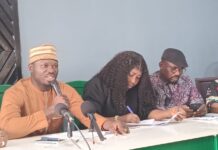
The Commissioner for Agriculture and Irrigation Development, Mr Johnson Ebokpo, disclosed this on Monday while briefing journalists at the Ernest Etim Bassey Press Centre, Calabar, during an update on the implementation of Project Grow, the state’s flagship agricultural development initiative.
Ebokpo said the government had identified unresolved land ownership and compensation issues as one of the major obstacles preventing effective utilization of vast agricultural lands acquired by previous administrations.
According to him, several government-acquired agricultural lands have remained inaccessible for years due to outstanding obligations owed to host communities, thereby limiting opportunities for commercial farming and agricultural investment.
The commissioner revealed that Governor Bassey Otu recently approved the payment of outstanding land rents and royalties on thousands of hectares of agricultural land across various communities in the state.
He explained that some of the affected lands were acquired as far back as 1974, while others were acquired in the 1990s, but compensation obligations were either not fully settled or remained unresolved over the years.
“Government formally and legally acquired many of these lands several decades ago. However, in some cases, royalties and other obligations were not paid. When such obligations remain outstanding, it creates distrust and weakens government-community relations, making access to those lands difficult,” Ebokpo said.
He noted that although the lands legally belong to the government, unresolved compensation issues had often resulted in disputes and resistance from host communities, thereby affecting agricultural projects and investment initiatives.
According to him, the current administration is committed to restoring confidence by fulfilling its obligations and strengthening partnerships with communities hosting government agricultural assets.
The commissioner explained that the move would facilitate access to approximately 13,000 hectares of land spread across different parts of the state, creating opportunities for expanded agricultural production and agribusiness investments.
He said resolving the land issues would support ongoing efforts to scale up rice production, promote commercial agriculture, and attract investors interested in large-scale farming and agro-processing ventures.
Ebokpo stressed that access to land remains a critical factor in achieving the state’s agricultural transformation agenda, adding that no meaningful expansion of commercial agriculture can occur without addressing foundational issues relating to land tenure and community relations.
He further stated that the government was working closely with relevant agencies, including the Ministry of Lands, to ensure the implementation of the approved payments and the regularisation of outstanding obligations.
The commissioner said the initiative aligns with the broader objectives of Project Grow, which seeks to build a market-driven agricultural economy through improved access to financing, structured markets, aggregation systems, and increased private sector participation.
He added that resolving land access challenges would not only support agricultural production but also encourage investors to establish processing facilities and other value-chain enterprises within the state.
Observers say the development could significantly improve the ease of doing business in the agricultural sector and strengthen the state’s efforts to position itself as a major food production hub in Nigeria.
The move comes as the Cross River State Government intensifies efforts to expand agricultural production, improve food security, create jobs, and attract investments under its ongoing agricultural transformation programme.