


By Efik Heritage Foundation, EHF
…Duke Town, Creek Town, Old Town, Cross River Delta, 1767
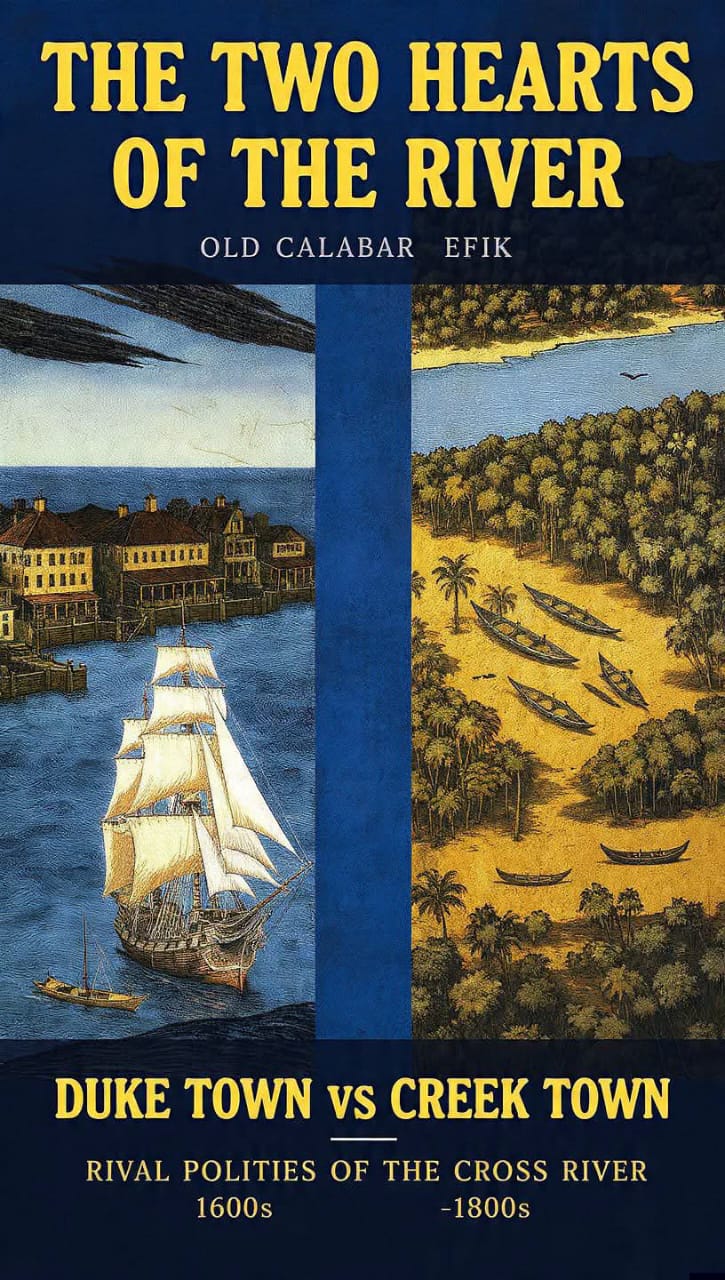
By 1767 Old Calabar was the largest slave-trading port on the Bight of Biafra for British ships. But Old Calabar was not one town. Trade and political power were split between three Efik settlements on the Cross River.
Old Town was the oldest Efik settlement. By the 1760s it was already losing direct access to European ships because Duke Town and Creek Town sat downriver. Duke Town controlled the lower river mouth. Houses like Duke, Henshaw, and later Eyamba had the strongest direct trade with Liverpool captains. Creek Town controlled the middle river. Houses like Eyo, Orok, and Asibong dominated and had stronger links to inland trade routes.
What changed in 1767 was documented by British ship captains’ logs from 1767 to 1770. They record a pattern where if one town refused a price or raised comey, captains would sail to the next town to get better terms. Because Duke Town, Creek Town, and Old Town were competing for the same ships, they undercut each other on the price of enslaved people and on comey duties.
The result is recorded in British trade correspondence. Old Town was shut out. By the 1770s to 1780s, Old Town petitions and British accounts note that Old Town could no longer trade directly with Europeans and was blocked by the towns below it on the river. Prices fell for Efik sellers because the rivalry gave European captains leverage. Where other African ports set unified prices through one authority, Calabar’s split allowed captains to play towns against each other. Power shifted downriver. Trade revenue and political influence moved from Old Town to Duke Town and Creek Town. By the 1800s, those two were the recognized kings of Old Calabar.
Efik oral accounts refer to 1767 as the year the river broke. It is cited as the origin of the Duke Town versus Creek Town rivalry that lasted through the 19th century. That split is still traceable in lineage names. Duke Town lines include Duke, Henshaw, and Eyamba. Creek Town lines include Eyo, Orok, and Asibong. Elders say the lesson of 1767 was that when Efik houses competed on the river instead of presenting one front, outsiders set the terms.
1767 still matters for three reasons. First, political structure. After 1767, Ekpe society was used more deliberately to enforce river-wide rules such as fixed comey rates, standardized palm oil measures, and penalties for houses that undercut others. Ekpe became the mechanism to prevent another 1767. Second, diplomacy. The distrust from 1767 explains why Creek Town’s King Eyo Honesty II and Duke Town’s King Eyamba V were rivals even while signing joint papers in 1841 to end the slave trade. Third, economic pivot. The same merchant houses that lost unity in 1767 later re-unified under Ekpe law to switch to palm oil and kernels in the 1800s, using the credit and network systems they had built in the slave trade era.
In summary, the factual record shows 1767 price wars, captains playing towns against each other, and Old Town’s documented decline. The oral tradition shows a political break that made Efik leaders strengthen Ekpe into a cross-town constitution so the river would never be divided again.
Primary archival and scholarly sources
1. Duke Town, Wikipedia – 1767 feud account
Records that in 1767 six British slave ships arrived during a feud between Duke Town and Old Town. Duke Town leaders made a secret arrangement with captains: Old Town leaders were invited aboard under guarantees of safety, seized, and some were executed by Duke Town.
This documents the split and use of European ships in inter-town rivalry.
2. Little Ephraim Robin John and Ancona Robin John, Wikipedia
Notes the 1767 bitter rivalry between Old Town and New Town or Duke Town. Trade negotiations stalled, and Duke Town traders recruited British captains to ambush Old Town traders. The Robin Johns of Old Town were kidnapped during that ambush.
This supports the price wars and undercutting pattern and Old Town’s loss of direct access.
3. Efik Traders of Old Calabar, edited by Daryll Forde, 1968
Contains Antera Duke’s diary, a primary Efik merchant record from Duke Town in the late 1700s. It is cited as a key source for how trade, alliances, and rivalries shaped power and conflict in Old Calabar.
Used by historians to trace the shift of influence to Duke Town and Creek Town.
4. Historical Nigeria – Old Calabar Merchant Houses and Ekpe
Documents that Old Calabar included Duke Town, Creek Town, and Henshaw Town, and that merchant houses like Duke, Henshaw, Eyamba, and Eyo ran trade through lineage-based houses.
Also notes the comey system and the pivot to palm oil after the slave trade.
This backs the lineage split: Duke, Henshaw, Eyamba for Duke Town, and Eyo, Orok, Asibong for Creek Town.
Context and secondary sources
5. Ozi Ikoro – A Tale of Three Towns
Describes the relationship among Creek Town, Old Town, and Duke Town as both cooperation and rivalry. Competition for access to European traders sparked tensions and helped strengthen Duke Town’s base.
Also notes Old Town’s role in regional politics despite not dominating trade later.
6. Efik Stories – Betrayal of 1767
Public history series that frames 1767 as three Efik towns competing for dominance: Old Town controlling trade flow, Duke Town rising, and Creek Town seeking old glory.
Used here to reflect documented oral tradition on the river broke narrative.
What this covers from the text:
– Three-town structure and trade competition
– 1767 feud, ambush, and Old Town’s decline
– Shift of power to Duke Town and Creek Town and merchant house lineages
– Ekpe’s later role and comey and palm oil pivot