


…One-Year Appraisal of Prof. Francisca Bassey’s Vice-Chancellorship at UNICROSS: Progress, Challenges and Outlook
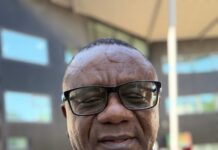
Prof. Francisca Bassey (Professor of Organic/Food Chemistry) has served as substantive Vice-Chancellor of the University of Cross River State (UNICROSS) since 17 July 2025, after about six months as Acting VC from February 2025.
As of July 2026, this marks roughly one year in the substantive role (longer including the acting period). She is the second substantive female VC in the institution’s history. She was appointed by Governor Bassey Edet Otu (Visitor to the university) after a selection process, following a period of leadership turbulence.
Her first year is portrayed as a period of stabilisation and measurable progress after prior instability, with emphasis on infrastructure, staff/student welfare, academic systems, and external partnerships.
Key Reported Achievements
1. Infrastructure and Campus Environment
Installation of over 100 solar-powered street lights (main campus and staff quarters) and ongoing solar power for the Administrative Block to improve reliability and cut generator costs.
2. Water reticulation and borehole reactivation at Okuku Campus addressing long-standing scarcity.
3. Hostel progress: recovery/renovation efforts, first hostel building secured for Ogoja Campus, NDDC support for a 500-unit hostel at Calabar Campus, and a reported ₦4 billion PPP for larger-scale hostel development; existing hostels undergoing renovation.
4. Renovation and Furnishing of Heads of Department and Deans’ offices (some made ensuite), lecture halls, laboratories, and long-abandoned structures (e.g., converted into classrooms/offices at Ogoja, gymnasium from an old cafeteria building commissioned with state support).
5. Entrepreneurship workshop, 10-hectare oil palm plantation at Okuku (expansion planned), recovery of a former bank building for CRUTECH Microfinance Bank (boosting IGR and campus banking), and approvals for intra-campus roads and a mini stadium.
6. Security enhancements, including approval for a police station at Okuku Campus.
Academic and administrative systems
7. Creation of a Faculty of Computing (with complex approval).
8. NUC accreditation exercise for 18 newly introduced programmes.
9. Restoration of the student results portal (millions of results uploaded/migrated; reports of clearing large backlogs).
9. Digital upgrades: high-speed Internet, interactive smart boards, smart-campus initiatives, CBT for General Studies exams with faster results, and hybrid Senate meetings.
10. Timelier submission of results by lecturers and staff promotions to professorial ranks.
11. Acquisition of a broadcasting licence for the university radio station and expansion of e-libraries.
12. Strategic planning: Deans, Directors, and Heads of Department presenting two-year action plans.
Staff welfare & Internal engagement
13. Implementation of the new minimum wage and improved subvention.
14. First UNICROSS Staff Week with awards and recognition.
15. Emphasis on integrity, prayer/mentorship outreach, and community engagement (e.g., endorsing programmes for female students and Children’s Day outreach).
Partnerships & External Visibility
16. Engagements with Cyprus International University, Zhenjiang College (China), Nigerian Air Force, FRSC (road safety research), and participation in international conferences (e.g., IATATA in Cape Verde, July 2026).
17. Presentation of university innovations (e.g., medical ventilator and automatic garri fryer) to the Governor.
18. Bassey’s personal recognition, including induction as the first female NATE Fellow in Cross River State.
These steps are described as converting inherited deficits into progress, with improved confidence among stakeholders and alignment with sustainability and global engagement goals.
Challenges & Criticisms
Human achievements are laced with challenges, criticisms and the room for improvement. This section is dedicated to highlighting this:
A. Industrial relations: ASUU UNICROSS embarked on an indefinite strike from 19 May 2026 over non-implementation of a new salary structure and welfare benefits. It lasted for over two months and was suspended in mid-to-late July 2026 after Governor Otu’s intervention and meetings involving the VC, management, and union leaders. This disrupted the academic calendar.
B. Funding constraints: The VC has publicly appealed for the state government to take fuller responsibility for staff salaries, recruit more staff, increase funding, complete perimeter fencing, and improve access roads. The university implemented its first school fees increase since 2009, citing rising costs.
C. Inherited and ongoing issues: Previous leadership turbulence, security concerns on campuses, and the need to clear large academic record backlogs were noted. Resource limitations remain a structural constraint for a state-owned multi-campus institution.
Overall Assessment
After roughly one year as substantive VC (and longer in an acting capacity), Bassey’s administration is widely credited in available sources with restoring direction, delivering visible infrastructure and systems improvements, advancing staff welfare measures, and expanding external linkages. These efforts address practical campus needs (power, water, accommodation, results management, digital tools) and position the university for accreditation and modest international engagement.
Persistent challenges—especially funding dependence on the state government, industrial relations sensitivity, and the scale of multi-campus infrastructure needs—remain significant. The recent ASUU strike illustrates that welfare and salary implementation issues can still disrupt operations despite minimum-wage progress. Long-term success will depend on sustained state support, consistent delivery of announced projects (many still ongoing or at approval stage), successful accreditation outcomes, and stable academic calendars.