

By Amarachi Ugwu
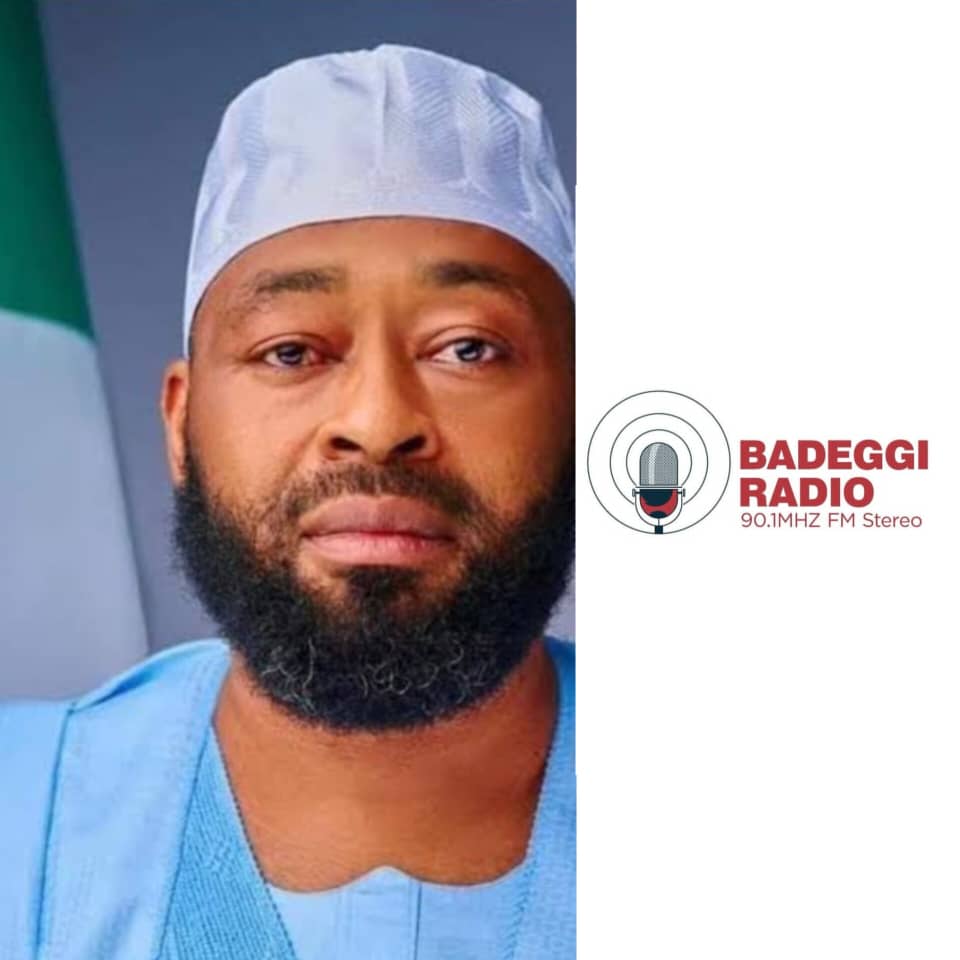
Nothing chills a democracy like watching a governor order the shutdown of a private radio station simply for doing its job. In Niger State, Governor Umaru Bago’s attempt to silence Badeggi 90.1FM by directing its closure and license revocation was more than an act of defiance; it was a lamentable show of power run amok. Yet, contrary to alarmist reports, the station never went silent. It continued broadcasting and took the fight to court. As of last court sitting, 3rd September 2025, attempts at an out of court settlement by the government failed, although legal avenues for resolution remain open.
Make no mistake, this is not a petty dispute. It’s a dangerous precedent. Only the Nigerian Broadcasting Commission (NBC), not a state governor, has the statutory power to revoke or suspend broadcast licenses. The Minister of Information also made this crystal clear, underscoring that Bago’s directive was both illegal and politically motivated. But the real question is, if Governor Bago had the temerity to try this, what makes us think other state governors won’t dance into it tomorrow?
It is no surprise that outrage followed. The Nigerian Bar Association described Bago’s directive as “executive rascality of the highest order.” The Nigerian Guild of Editors likened it to the dark days of military rule when journalists were treated as state enemies. The Nigeria Union of Journalists also condemned the order, calling it an assault on free speech and democracy. The National Human Rights Commission went further to label it suppression of press freedom and demanding that the station be allowed to operate freely. Amnesty International described the governor’s actions as an intolerable abuse of power. When so many institutions across law, rights, and media converge in outrage, it signals that what happened in Niger state in Nigeria, is a national red flag.
What’s at stake in this tussle is the core of democratic accountability. Journalists aren’t the enemy; they are the pistons that keep the engine of democracy running. When political leaders throw tantrums rather than answer tough questions, they are choosing cowardice over governance. While the NBC is the rightful regulator, we must also admit that its subtle and sometimes excessive control already weighs heavily on Nigerian media. Between arbitrary fines, shutdowns, and censorship under the guise of “regulation,” stations often struggle to report freely. Now, imagine a governor bypassing even that flawed structure to issue his own unlawful decree. This is not just control, it is chaos.
The Centre for Journalism Innovation and Development (CJID) in their condemnation of this development did warn that such executive overreach creates a dangerous climate of fear that only benefits one person and that’s the one in power. In fact according to CJID’s Press Attack Tracker, this is a worrisome pattern of assaults in Niger state, with records such as that on a Voice of America reporter in November 2023, and multiple detentions of a People’s Daily correspondent in early 2025, clearly indicating and proving that Niger State is becoming increasingly hostile to the press, ranking 11th in CJID’s Subnational Openness Index, reflecting a suffocating environment for independent media.
Nigeria as a country already has a high record of attack on journalists, since 1986, with reports revealing over 1,000 verified attacks on journalists, ranging from physical assaults and unlawful arrests to denials of access and threats. In the most recent five year span (2019 – 2023), a staggering 597 of such incidents were recorded, which is more than half of the total. Between July and October 2024 alone, CJID, in collaboration with Citizens’ Gavel, documented 90 cases of press attacks. Many of these were attributed to state actors, raising uncomfortable questions about who is protecting citizens when those meant to serve them threaten the very voices that keep them informed.
We must really ask a critical question. Is it still democracy when the so called Fourth Estate is under siege from within? When journalists are intimidated, arrested, or physically harmed, when critics are silenced without due process, the people are the ultimate casualties. Let me even remind us the fact that access to information is not a luxury, it is a constitutional right, enshrined in Section 39 of Nigeria’s Constitution. Shutting down media channels is not protection, it is censorship that erodes the public’s ability to hold power accountable.
If Governor Bago can attempt to darken the airwaves of a private station like Badeggi FM without consequence, what will stop others from doing the same? Today it is Badeggi 90.1FM; tomorrow it could be the paper you read, the station you tune to, or the online outlet you trust. Normalizing this level of impunity is like handing every governor a loaded gun against the free press.
We need to defend journalists not as a profession, but as guardians of public interest. Media freedom should not be negotiable. The court matter involving Badeggi FM offers a critical opportunity to reaffirm that legal norms, not unchecked authority, are the foundation of a democratic society. The public deserves media that watches the watchers, not echoes of power. When governors look inward at their media rather than outward to their people, they abandon the job for which they were elected. Accountability doesn’t happen when microphones go dark, it happens when those holding microphones are allowed to speak truth to power.
To every journalist, editor, civil society group, and concerned citizen reading this, now is the time to act. Demand transparency. Demand that the NBC reassert its regulatory role but also reform its practices to allow freer journalism. Demand that security agencies refuse to enforce unlawful directives. Demand that courts uphold the law, not political pressure. Above all, insist on a Nigeria where the press is empowered, not caged.
Silencing media doesn’t solve governance problems, it magnifies them by hiding them. Democracy isn’t a spectator sport; it thrives when voices are loud, fearless, and free. Let’s not allow silence to become the new normal.
Ugwu can be reached via amarachukwuugwu518@gmail.com