


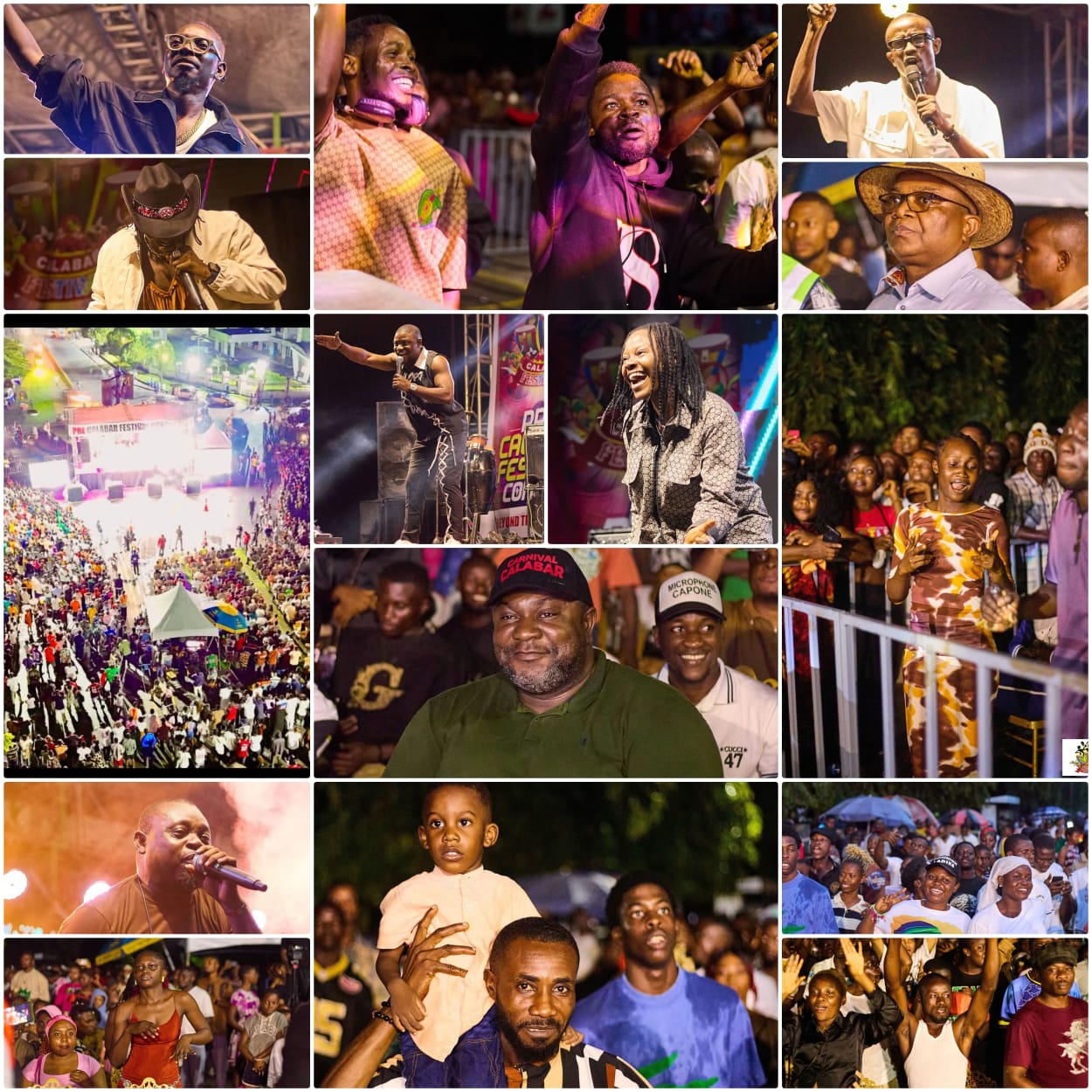
…While the spotlight often shines on Lagos, a vibrant, grassroots scene in Calabar is incubating a new generation of artists, proving that the future of Nigerian sound is brewing in its local communities.
CALABAR– The grassroots energy of the street party is powerfully amplified by top-down support from the state government, which views the carnival as a cornerstone of cultural and economic policy. Governor Bassey Otu officially flagged off the 2025 Carnival dry-run, framing it not just as a party, but as a historic event of “reconciliation, cultural revival, and global attraction.” Directly inviting the world, Governor Otu declared, “I am welcoming the whole world to come to Calabar and enjoy this great party with us. If you do not come, you are going to miss too much.” He powerfully anchored the event’s significance by stating, “We have the biggest street party right here in Calabar,” assuring that the 20th-anniversary edition, themed “Traces of Time,” would be one of the most vibrant ever witnessed.
Echoing the Governor’s vision with a palpable sense of local pride, the Special Adviser on Events, Effiong Ekpenyong, distilled the event’s unique appeal in a stirring social media post. “This is not O2 Arena. This is Not Lagos. This Is CALABAR….” the statement began, drawing a clear line in the sand and celebrating the authentic, homegrown nature of the spectacle. The message confirmed that the electrifying street party was merely a preview, a testing of the waters: “This Is Just The Pre Calabar Festival Official Concert…. We Were Testing The Microphone….” The post culminated in a direct call to action, solidifying the state’s commitment: “Calabar Is The Destination To Be This December…. It Is the Traces Of Time, And Will Be Beyond The Imaginable.” This rhetoric bridges the gap between the government’s macro vision and the community’s micro-level execution, proving that in Calabar, culture is a collaborative mission.
In an industry where narratives are often dominated by the glittering megacity of Lagos and probably Abuja or Port Harcourt, events like this are the lifeblood. This is where careers are not just launched, but forged in the direct heat of community support. The lineup was a roll call of local pride: Ijay Osonwa, Oku Charles Asu, Thelma Plethora Benson, Upper X Ekpenyong, YoungBone Maniels, Mc Mickey, Real Yung Shal Gro, and Mc Ted. These are the homegrown heroes, the names everyone in the neighborhood knows, and the artists for whom this stage is both a proving ground and a homecoming.
The Bridge: Terry G and the Passing of the Torch
Amidst the celebration of the new, a strategic nod to the past electrified the crowd: the appearance of a guest artist, the legendary Terry G. The “Akpako Master,” a pioneer of the frenetic electronic dance sound that shook the industry a decade ago, is more than a special guest; he is a bridge.
His presence served as a powerful validation of the local scene. For a veteran of his stature to share a stage with emerging talent sends an unmistakable message: What is happening here matters.
“I see the same fire in their eyes that we had,” Terry G remarked backstage, the echoes of his hit “Sangalow” still ringing in the air. “Lagos no be only for Nigeria. Talent dey everywhere. Ground like this, where the community dey behind their artists, na him dey create the strong ones. I come here to encourage them, to show say the road dey.”
This intergenerational exchange is priceless. It provides the young artists with a living blueprint for longevity and reminds the audience that today’s local heroes are tomorrow’s national treasures.
The Bigger Picture: A Blueprint for Cultural Sustainability
The Calabar street party and the official carnival dry-run are not just anomalies. They are a potent example of a model for cultural sustainability. In the face of a homogenizing global culture, these grassroots events, backed by government vision, are fortresses of local expression.
They are the unsung engines of the music industry, the proving grounds where unique regional sounds are perfected before being unleashed on the world. They answer the critical question of “what’s next?” in Nigerian music by pointing away from the centralized hubs and toward the vibrant, creative periphery.
As the final beats faded and the crowd spilled back into the Calabar night, the feeling was not of an ending, but a beginning. The hand-painted signs for “CALABAR FESTIVAL” may have been makeshift, but the foundation they represented was rock solid. Backed by a governor’s invitation to the world and a community’s unwavering passion, the dry run was a resounding success. The main event—the ascent of a new generation of Nigerian talent—is just getting started. The message is clear: the future of the country’s sound isn’t just being streamed; it’s being lived, loudly and proudly, on the streets of the country’s ancient port city –Calabar.