

Stakeholders in Cross River State have called for a shift from vehicle-based empowerment programmes to long-term industrial and agricultural investments capable of creating sustainable jobs and boosting economic growth NEGROIDHAVEN can report.
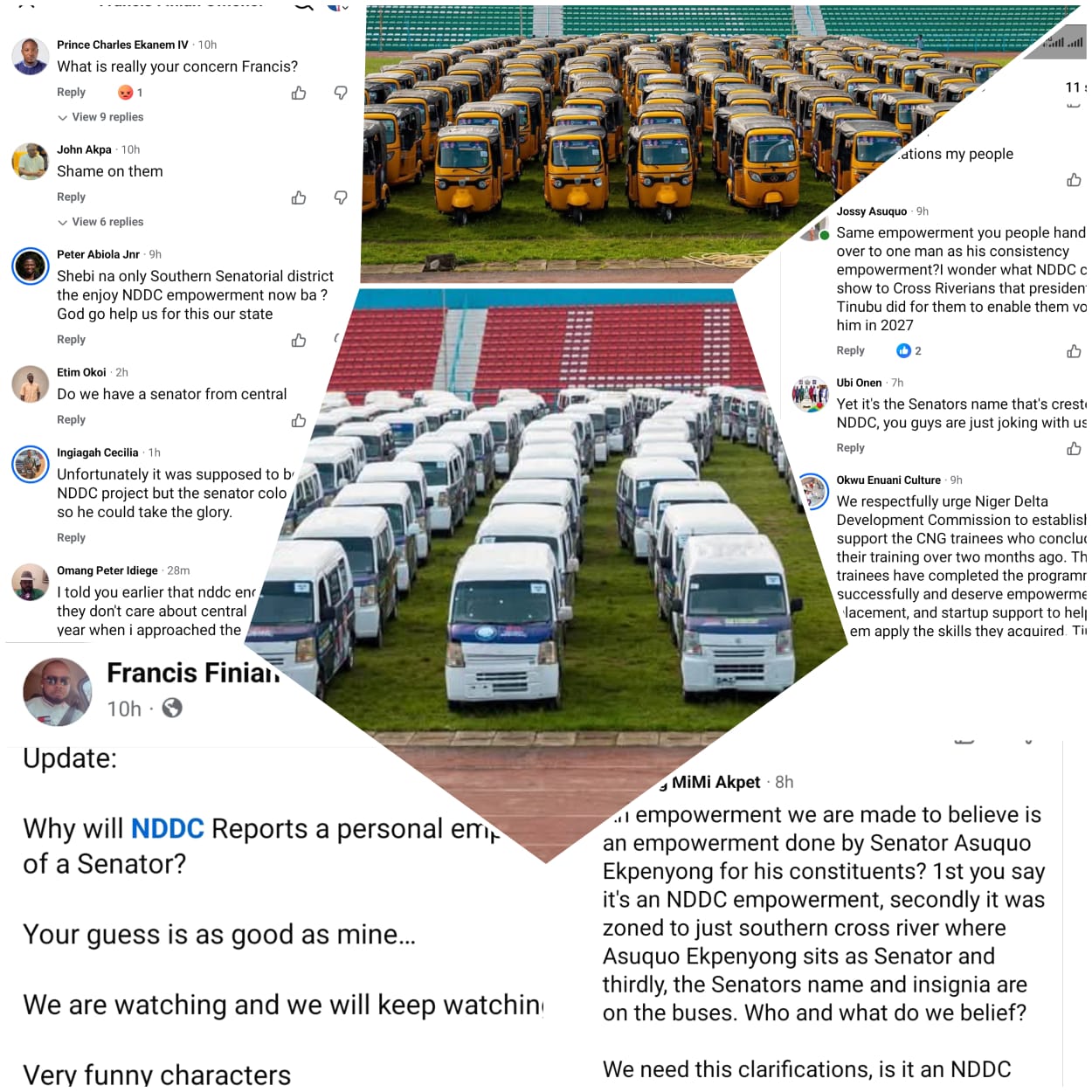
The calls followed the recent distribution of 150 minibuses and 200 tricycles by the Niger Delta Development Commission during an empowerment programme held in Calabar on Saturday.
While some residents commended the initiative, others argued that the growing emphasis on tricycle and vehicle distribution as empowerment may not address deeper economic challenges confronting young people in the state.
Some stakeholders suggested that resources channelled into the procurement of buses and tricycles could instead be invested in industries such as agro-processing plants, manufacturing factories, and small-scale production facilities capable of employing larger numbers of people.
Commenting on the development on the official Facebook page of the NDDC, a resident, Patrick Egaga, questioned the sustainability of the initiative.
“How exactly did keke and mini buses become empowerment sha? All the mini buses and kekes for Calabar. Shay we no fit use this money build one better company way go employ thousands? I no see this one as empowerment,” he wrote.
Another commenter, Godwithus Essien, advocated industrial investment and public-private partnerships rather than what he described as “loyalty compensation” empowerment.
“The money put together to get the tricycles and the mini buses, if we build a fully equipped palm processing plant in Akamkpa where products can be exported, will our GDP not grow? Public/private partnership should be encouraged in putting in systems that will outlive us,” he stated.
Similarly, Ubong Udo called for alternative empowerment strategies capable of supporting entrepreneurs and local production.
“Suki is a man I like but please we should be doing other kinds of empowerment. Some don’t have capital to start up something. We can build biscuits factory in CRS, we have more than enough bananas here but instead they will take them to Ogun State for production,” he wrote.
Others also expressed concern over increasing congestion caused by commercial tricycles and minibuses within Calabar metropolis.
Eno Bekwe Ikwen, while commending the initiative, urged authorities to prioritise agricultural support and logistics infrastructure.
“Good development. But make them leave mini buses small for now. Farmers need tractor, even delivery vans will help a bit. Mini buses in Calabar and environs is defacing the beauty of the state capital,” the commenter stated.
According to them, empowerment initiatives should focus more on building productive industries, supporting entrepreneurship, and creating systems capable of generating long-term economic value.
The debate comes amid increasing public scrutiny of empowerment programmes and growing demands for more sustainable approaches to economic development and youth employment in the state.