

The Nigeria Union of Journalists (NUJ), Cross River State Council, has expressed concern over the activities of transport regulatory agencies in the state, while calling for urgent government intervention on the deteriorating Ikom–Wula–Obudu Highway and growing environmental challenges across Cross River State NEGROIDHAVEN can report .
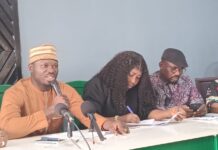
The position was contained in a communiqué issued at the end of the union’s congress held on June 3, 2026, at the Ernest Etim Bassey Press Centre, Calabar, and presided over by the State Chairman, Comrade Archibong Bassey.
Congress specifically frowned at what it described as the excesses of transport regulatory agencies, particularly the Cross River State Traffic Management and Regulatory Agency (TRAMRA) and the Calabar Traffic Regulatory Authority (CTRA).
According to the communiqué, officials and agents of the agencies have allegedly continued to harass motorists and transport operators under the guise of revenue generation, contrary to the state government’s directive that their primary responsibility should be traffic management and road regulation.
The union recalled that the state government had directed the agencies to focus on traffic control and related regulatory functions rather than revenue collection and therefore urged the appropriate authorities to investigate their activities and ensure strict compliance with existing directives. Congress said such measures were necessary to promote transparency, accountability, and public confidence in government institutions.
On infrastructure, the journalists appealed to Governor Bassey Otu to fulfil his commitment regarding the rehabilitation of the Ikom–Wula–Obudu Highway by directing the relevant authorities to commence immediate remedial work on the road.
Congress noted that the worsening condition of the highway continues to endanger the lives of commuters and motorists while hampering the transportation of agricultural produce and other economic activities along the corridor. The union warned that the road’s deterioration poses serious risks to residents and threatens economic productivity in communities dependent on the route.
The congress also called on the state Ministry of Environment to adopt more proactive measures in addressing environmental challenges across the state.
Specifically, it urged the ministry to ensure the prompt removal of fallen trees obstructing roads and to carry out a comprehensive assessment of ageing and weakened trees, particularly within the Calabar metropolis, to prevent avoidable threats to lives and property.
Congress further expressed concern over the continued violation of the state’s ban on scrap metal trading, popularly known as the “iron condemn” business, and called on enforcement agencies to ensure strict compliance with the directive, especially in Satellite Town and other parts of Calabar where such activities were reportedly still taking place.
While raising concerns on these issues, the journalists commended the state government’s ongoing urban renewal programme, particularly the rehabilitation of Azikiwe Street and Ewa Henshaw Street in Calabar South, noting that the intervention had improved road infrastructure and eased movement for residents after years of neglect.
The communiqué was drafted by a committee chaired by Comrade Sunny Nku, with Comrades Esien Ukorebi and Itam Ekpe serving as members.