


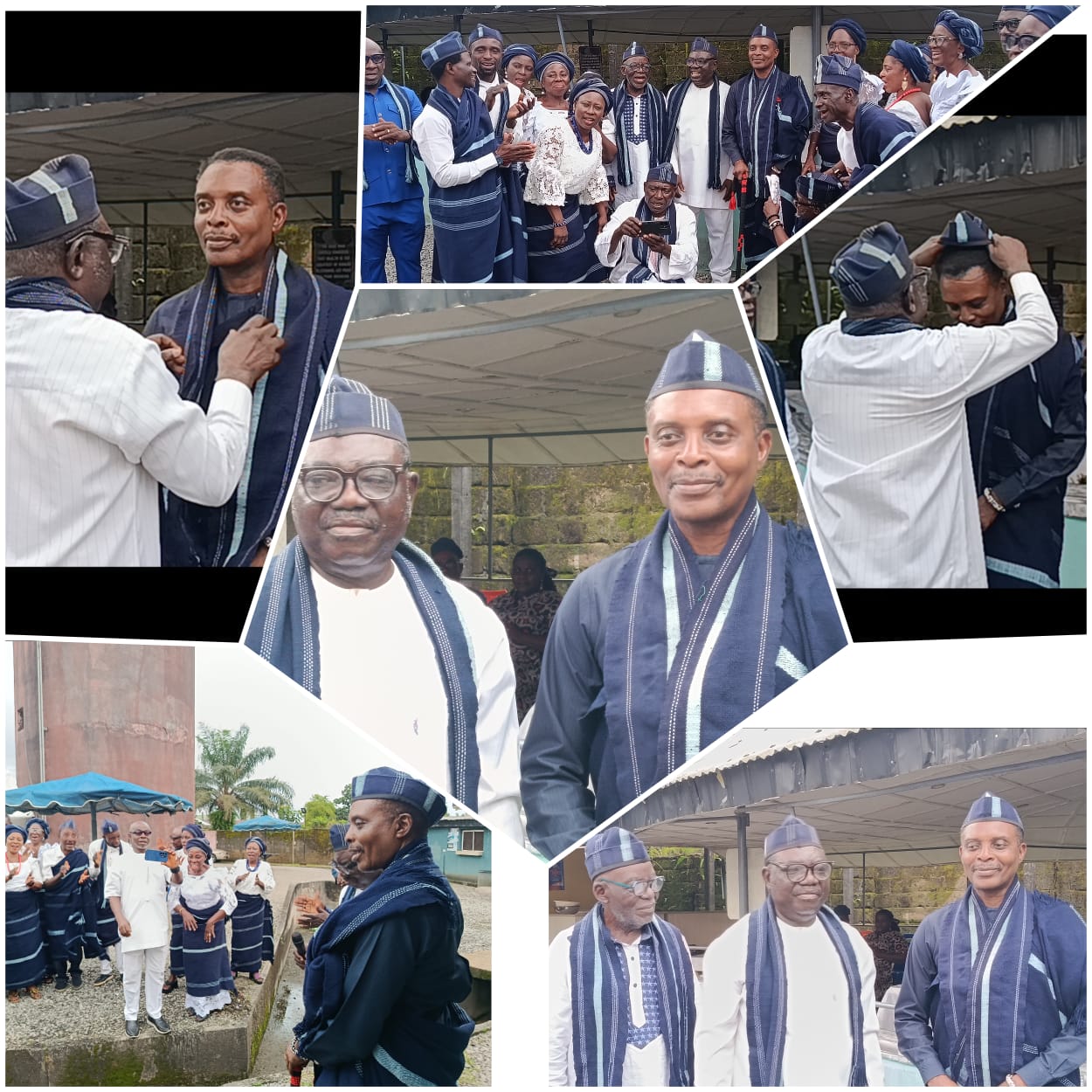
CALABAR—The Yala Progressive Union, YPU, Calabar Branch, has installed HRH Etubom (Arch.) Abasi Eyo Ndem, an Efik Eburutu patriarch, as its Grand Patron in a move the union said was aimed at strengthening cultural ties and mutual understanding between the Yala and Efik peoples.
Chairman of the YPU Calabar Branch, Dr Denis I. Ogar, said the decision to appoint Ndem was unanimous, citing his accessibility, friendliness, leadership qualities and non-tribal disposition.
Ogar, who spoke after the installation, described Ndem as a custodian of culture whose experience could contribute to the development of the socio-cultural organisation despite the differences in language between the Efik and Yala peoples.
He said, “We find him very suitable to be with us, irrespective of the difference in language. And we can learn a lot of things between the two languages. His language, Efik, and even Yala.”
According to him, the appointment was significant because the YPU Calabar Branch had never previously had a patron.
“This is a history-breaking event, because the YPU Calabar has never had a patron. And now God has given us one. We are excited to tell it,” Ogar said.
He explained that the Grand Patron would serve as an adviser to the organisation and could also contribute his knowledge of culture and community affairs to the union.
Ogar said Ndem’s role would not be limited to responding to requests for advice, noting that his position as a custodian of culture could enable him to identify areas where he could assist the organisation independently.
In his response after his installation, Ndem described the honour as more than a personal recognition, saying it represented another link in the longstanding relationship between the Efik and Yala peoples.
“As an Efik man, to be invited to serve as Grand Patron of the Yala Progressive Union, an association of intellectuals and leaders of thought of the great Yala people, is an honour I deeply appreciate,” Ndem said.
“I see it not merely as an individual honour, but as another link in an unbroken chain of neighbourly relations between two great peoples, whose interactions have been documented over many centuries.”
He pledged to promote issues that would be of mutual benefit to the two communities in his capacity as Grand Patron.
The Efik patriarch also used the occasion to call for a reassessment of African cultural knowledge, arguing that Africans could embrace modernity and science without rejecting their ancestral heritage.
Ndem said there was nothing for Africans to be ashamed of in their culture and traditions, arguing that some practices once dismissed as primitive were increasingly attracting scholarly and scientific interest.
He cited traditional approaches to education, oral hygiene, communal responsibility and healthcare, as well as Nsibidi, as examples of areas requiring greater attention and critical examination.
He said African societies should “examine our past with intelligence, not contempt” and avoid assuming that ancestral knowledge was inferior simply because it was not documented in Western textbooks.
Meanwhile, Ogar said the YPU itself was undergoing efforts to revive its activities and rebuild its national structure.
He traced the origins of the union to early efforts by Yala elites to mobilise their people for collective development, including the establishment of schools and scholarship support.
According to him, the activities of the organisation were disrupted by the Nigerian Civil War and later by the emergence of splinter youth groups.
He said the Calabar Branch was now working to resuscitate the YPU and was also helping to fast-track efforts to revive the national organisation based in Yala.
The chairman said the union’s history demonstrated the value of collective action among the Yala people, particularly in education and community development.
Ndem, in his remarks, further linked the cultural relationship to broader community interests, saying he would continue to support initiatives capable of promoting mutual benefits between the Efik and Yala peoples.
The installation therefore brought together the YPU’s effort to revive its organisational structure and its decision to place an Efik cultural leader in a formal advisory and patronage role within the Yala socio-cultural organisation.